Card only vending machine: what it fixes, and who it leaves out
A card only machine takes cash out of your building entirely, and it also locks out anyone standing in front of it without a card on them. Both halves of that are real. Nobody handles money, leaves a float, reconciles petty cash or digs a coin out of a jammed mechanism. But a person holding a badge and no wallet cannot buy anything. Which half matters more depends on who is in your building.
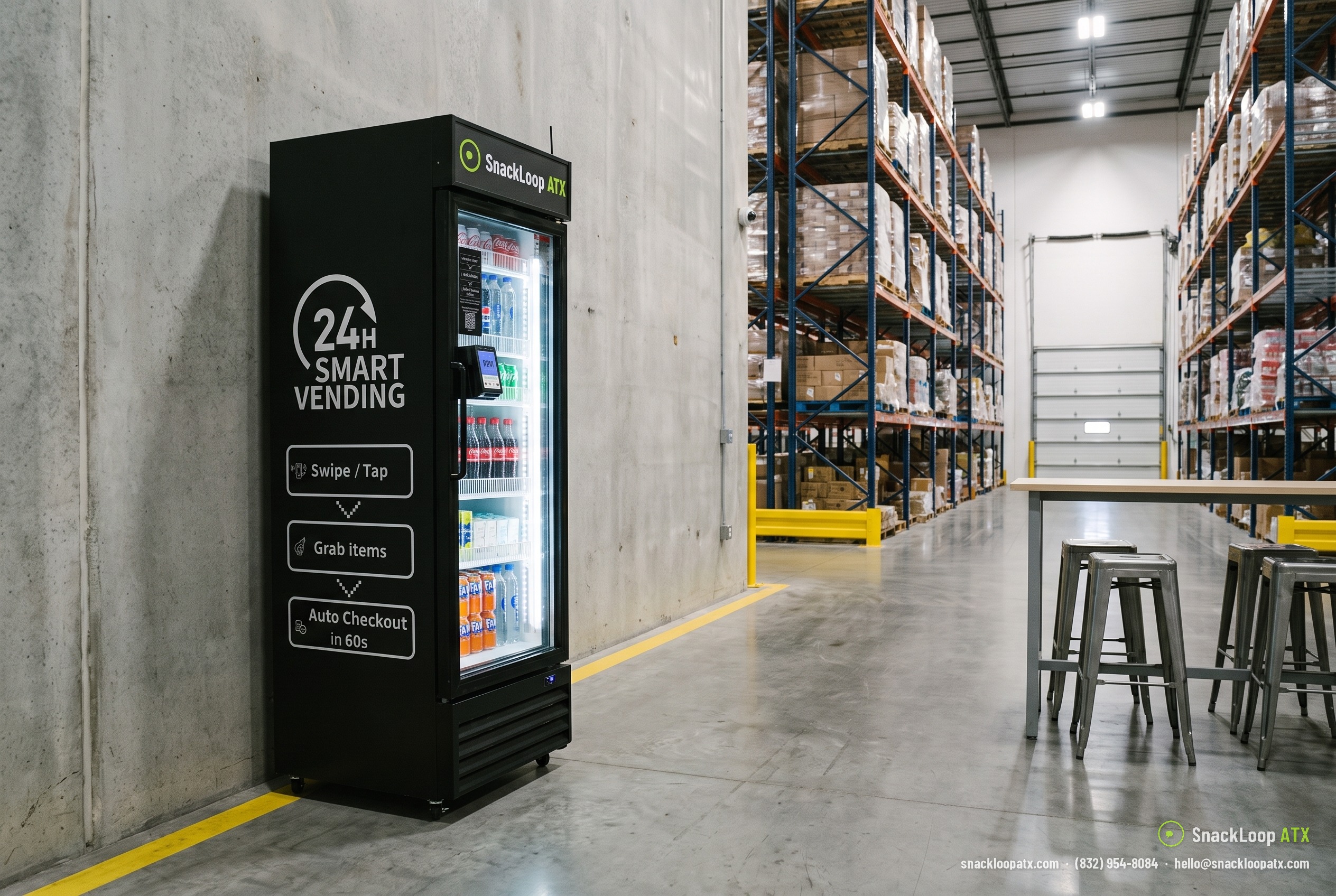
Our machines take a card or a contactless tap. There is no bill slot, no coin mechanism and no keypad code. That single decision removes a whole category of problems from your building, and it creates one real limitation. We would rather name that limitation here than have you discover it after installation. The limitation is this: anyone standing in front of the machine without a card on them cannot buy anything.
What does taking cards only actually change for the host?
The clearest change is that nobody in the building handles money.
There is no float to leave in a drawer and no petty cash to reconcile against a machine. Nobody has to find change for a resident or a visitor. Nobody has to explain why the machine ate a dollar bill, because there is no slot to eat it. Coins cannot jam a mechanism that does not exist, and a worn note cannot be rejected by a reader that is not there.
It also changes what the machine is worth to somebody in an empty building at night. A cash machine holds cash. Ours holds packaged product, and there is nothing inside worth taking for cash.
Checkout is a card or a contactless tap and it completes automatically in about 60 seconds. Nobody at your front desk becomes the payment support line for equipment they do not own.
Who does a card only machine leave out?
Anyone who does not have a card on them at that moment.
That is the limitation, stated plainly. It is not a quibble, and it is not something we can soften by describing the tap as convenient. Someone standing in front of the machine with money in their pocket and no card cannot buy anything from it. They walk away. It makes no difference whether they have a card at home, because what decides it is what is in their hand when they are thirsty.
We cannot fix that with a setting. The machine has no cash path, and we are not going to promise you one.
Where does that limitation bite hardest?
In buildings where the honest answer to "how do people here pay for things" is not a card.
Consider a building whose people are used to paying cash. If the places people here already buy food and drinks from all take cash, a card only machine is asking them to change how they do something ordinary at the exact moment they are hungry.
Consider a site where staff leave their wallet in a locker. If that is how your warehouse, plant, kitchen or clinic runs, then phone and wallet go in the locker and what comes back out onto the floor is a badge. Those people pass the machine on every break with nothing they can pay with, and no amount of good product mix changes that.
Consider a lounge where a visitor came in without a phone. Somebody waiting on a car repair, or sitting with a family member, may not have a wallet or a phone within reach. A machine they cannot use is a small frustration at a moment that is already not a good one.
An office in downtown Austin and a warehouse out toward Pflugerville can give you completely different answers to the same question, and the difference is not the size of the building.
What should you look at before you decide?
Watch who is in your building and how they pay for things now. Not what is true generally. What is true in your hallway.
| What to watch in your own building | What it would tell you |
|---|---|
| How people pay at the nearest place they buy food or drinks | Whether reaching for a card is already the ordinary move here, or the unusual one |
| What people carry onto the floor during a shift | Whether wallets and phones stay in a locker while badges go out to work |
| Whether visitors spend time in the building without their own belongings | Whether the people with the most time on their hands are also the ones with nothing to pay with |
| What your front desk gets asked for | Whether requests for change are part of the day here, or something nobody has ever asked |
None of that requires a survey. It requires standing in the hallway on an ordinary day and paying attention. You are the one who can see it. A figure from somewhere else cannot.
Is a card only machine a fair reason to say no?
Yes, plainly.
If you look at your own building and conclude that a meaningful part of the people in it would end up standing in front of the machine unable to use it, that is a legitimate reason to decline. We would much rather hear it before installation than after. A machine nobody in the building can use is worse for you than an empty corner: it takes floor space, it starts to look neglected, and it invites the same awkward question over and over.
Nothing is lost by saying no. There is no long-term lock-in to unwind, because there is nothing to be tied into until you decide the arrangement fits.
What happens if it does fit your building?
Then it is straightforward, and the honesty above is the whole point: we would rather place a machine people actually use than one that becomes furniture.
SnackLoop ATX delivers and installs the machine, stocks it, restocks it on a regular schedule, and services and repairs it at our own cost. The machine and everything in it stay ours until somebody pays for an item. You provide floor space and a standard power outlet. Placement terms vary by location and are agreed before installation, and there is no long-term lock-in.
If you have looked at your building and think the trade works, the application form takes about a minute. And if the machine already in your breakroom is the problem rather than the payment method, that is a different question, and we covered switching vending providers without a gap in service on its own.
Frequently asked questions
Does the machine take cash at all?
No. Payment is a card or a contactless tap at the machine, and checkout completes automatically in about 60 seconds. There is no bill slot, no coin mechanism and no keypad code to hand out or keep track of. Nothing in the building needs to be counted, banked or reconciled by you.
What happens if someone here does not have a card with them?
They cannot buy anything, and they walk away. That is the honest answer. It applies to a person whose wallet is in a locker as much as to a visitor who came in without one. Whether that is a small gap or a real problem depends on who walks past the machine in your building.
Can you add a cash option later if it turns out we need one?
Do not plan around that. The machine we install has no bill slot and no coin mechanism, so cash is not something you can switch on afterwards. If your building genuinely needs a cash path, the right time to say so is before installation, not once the machine is standing in your breakroom.
Is a machine with no cash in it safer to have in the building?
There is nothing inside worth taking for cash, only packaged product, so the machine is not a box of money sitting in your hallway overnight. It is also our equipment: the machine and its stock stay ours until somebody pays for an item, and we service and repair it at our own cost.
What if I decide a card only machine is wrong for my building?
Then tell us and we stop there. We would much rather hear it before installation than leave a machine that nobody in the building can use taking up floor space. There is no long-term lock-in, and nothing is agreed until you have seen how the arrangement would actually work.