September 30, 2026 · By SnackLoop ATX
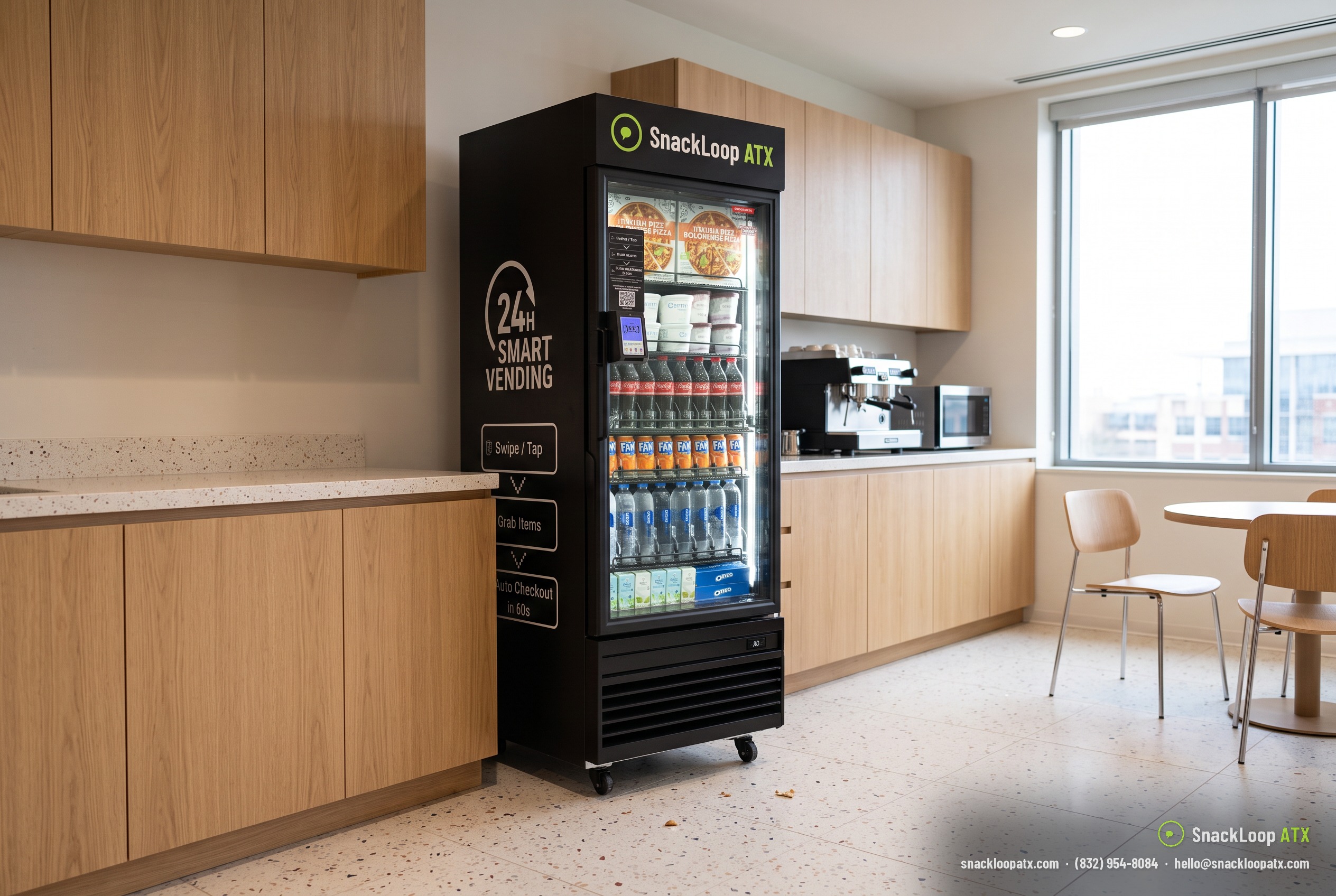
The footprint is the smallest part of the answer. What actually stops an installation is the route to the spot: a door the machine will not pass, a turn in a corridor, a step with no ramp. After that comes the wall it stands against, then an outlet within reach that is free rather than borrowed. Ask us for the exact figures on the model, and we will walk the route with you.
Read article →September 23, 2026 · By SnackLoop ATX
You did not buy it and it did not come with the building, so the first move is to find out who put it there and ask, not to decide what to do with it. Start at the machine and look for a name, then the vendor records, then the manager who left. Once you have them on the phone, a few questions settle the service schedule and the paperwork that now has the wrong name on it.
Read article →September 16, 2026 · By Mike Maximov
The machine and everything inside it stay ours until a customer pays, so vandalism, damage and loss are our problem rather than a bill that lands on the host. There is no cash in it either, because payment is card or contactless only. What a host does control is narrower and more useful: where the machine stands, whether it sits in view, the lighting, and who can get into the space after hours.
Read article →September 9, 2026 · By SnackLoop ATX
You do, within limits. The host shapes the mix by asking, and a request put in writing is easier to act on than one mentioned in passing. What the host cannot do is turn a shared machine into an allergen free environment, because it is not one and should never be described as one. Here is how to ask, how to read the requests you get, and where the honest limit sits.
Read article →September 2, 2026 · By SnackLoop ATX
It comes out and something else goes in, and that is our job rather than yours. The harder part is why it stopped moving, because there are four different reasons and they look identical from inside one building. A product that fails everywhere is a bad product. One that fails here but moves elsewhere is a building talking. Telling those apart is the work.
Read article →August 26, 2026 · By Mike Maximov
September can move the building's day, and a mix that fit in July can stop fitting. If part of your building runs on a school schedule, mornings can pull earlier, the lunch hour can tighten around a pickup, and the afternoon lull can land at a different hour than in August. That is not a school problem but a building one, and a school year starting is when to look at the shelf and say what is not working.
Read article →August 19, 2026 · By SnackLoop ATX
The host pays for the electricity. The machine plugs into your outlet and runs on your meter, the same way everything else plugged in around it already does. Everything else is ours: the machine itself, delivery, installation, stocking, restocking, service and repair. If the power draw is a real concern for your building, that is a conversation worth having before we install, not after.
Read article →August 12, 2026 · By SnackLoop ATX
Ask who owns the machine, who pays when it breaks, how often it gets restocked, what happens if the product mix is wrong, how the placement ends and who picks up the phone. None of those are trick questions. The reason they work is that a good operator answers each one in a sentence, and a bad one gets vague instead. The vagueness is the signal you are actually testing for.
Read article →August 5, 2026 · By SnackLoop ATX
Three observations decide whether a machine works at your site, and you can make all three yourself in a single walk-through: how many people are genuinely in the building on an ordinary day, how easy it is for one of them to buy something else nearby, and whether anybody there is stuck waiting with no alternative. Payroll headcount answers none of that. Walk your own site in the order below and you will know more than anyone assessing your building from a map.
Read article →July 29, 2026 · By SnackLoop ATX
Usually not, if you already sell cold drinks at your own register, because then the machine is competing with you rather than with anything else. It changes in three situations: a store that sells something else entirely and has no food or drink on site, a store where people stay long enough to get thirsty, and staff who cannot leave the floor. Here is how to tell which one you are.
Read article →July 22, 2026 · By Mike Maximov
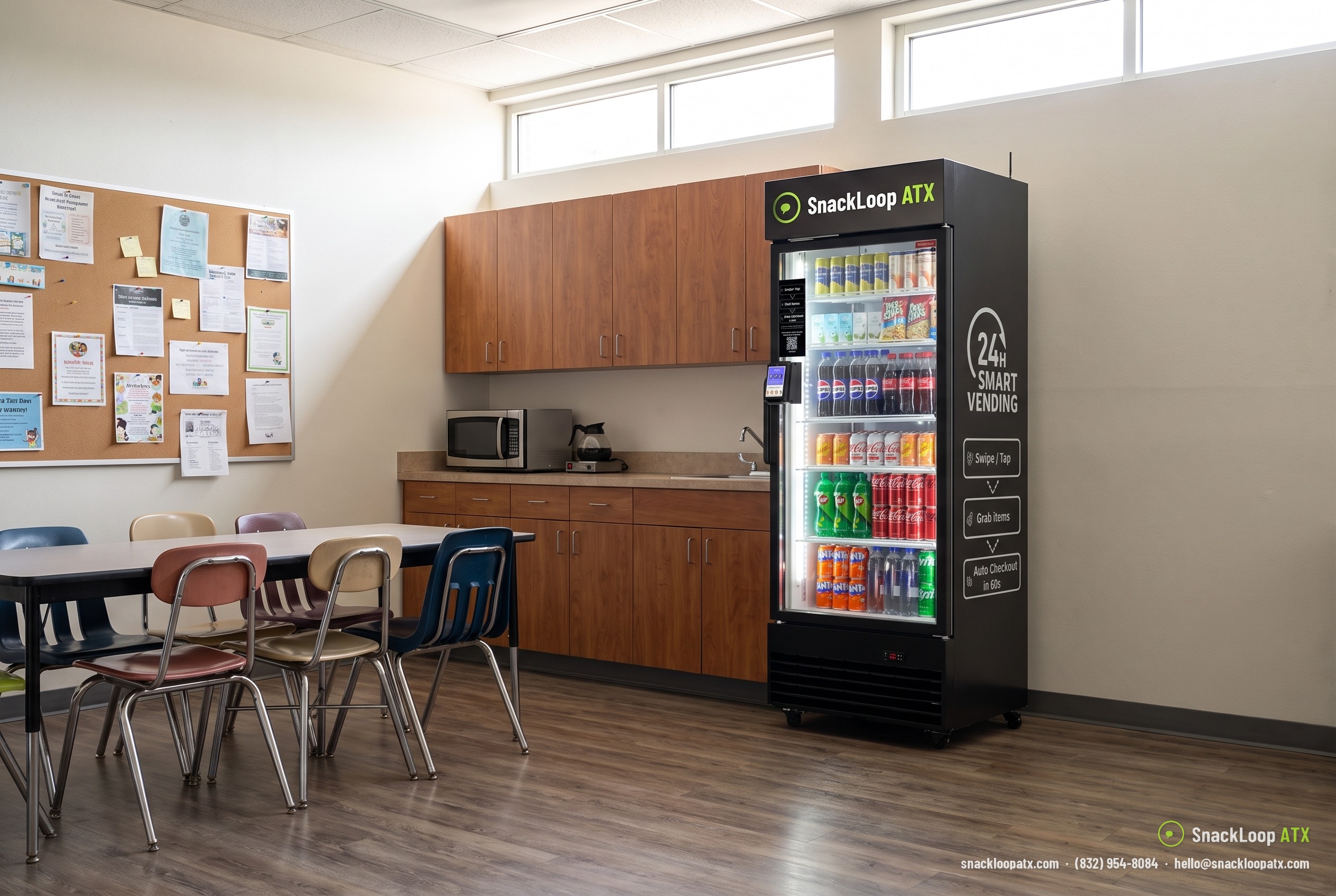
A teachers' lounge is a straightforward workplace placement, and it is the only placement this article is about: the machine goes behind the staff door, not in a hallway, a cafeteria or a gym lobby. Anything a student can reach is a different decision, governed by the district, and not something we propose. What makes the lounge unusual is a bell-timed break and a summer that empties the building.
Read article →July 15, 2026 · By SnackLoop ATX
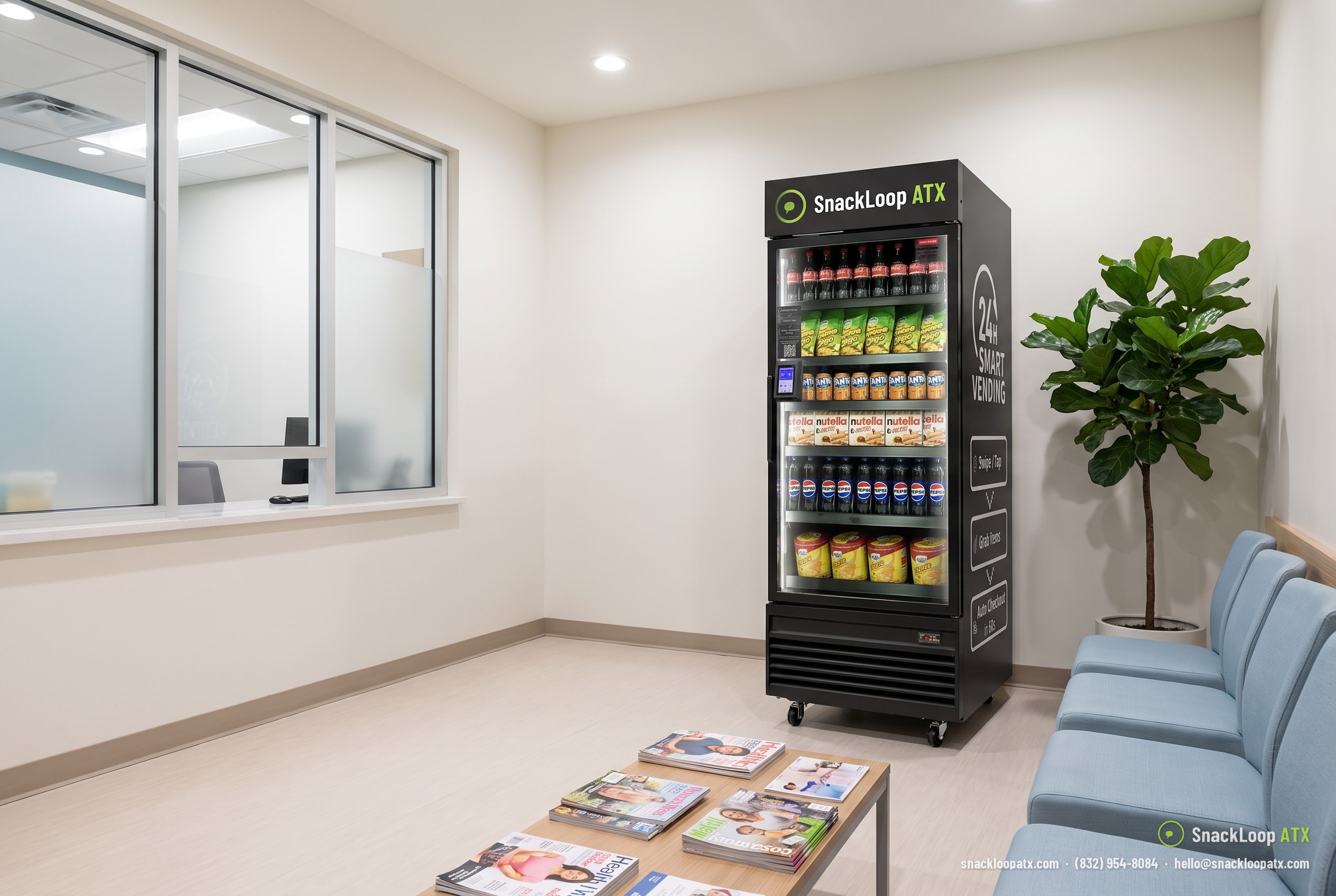
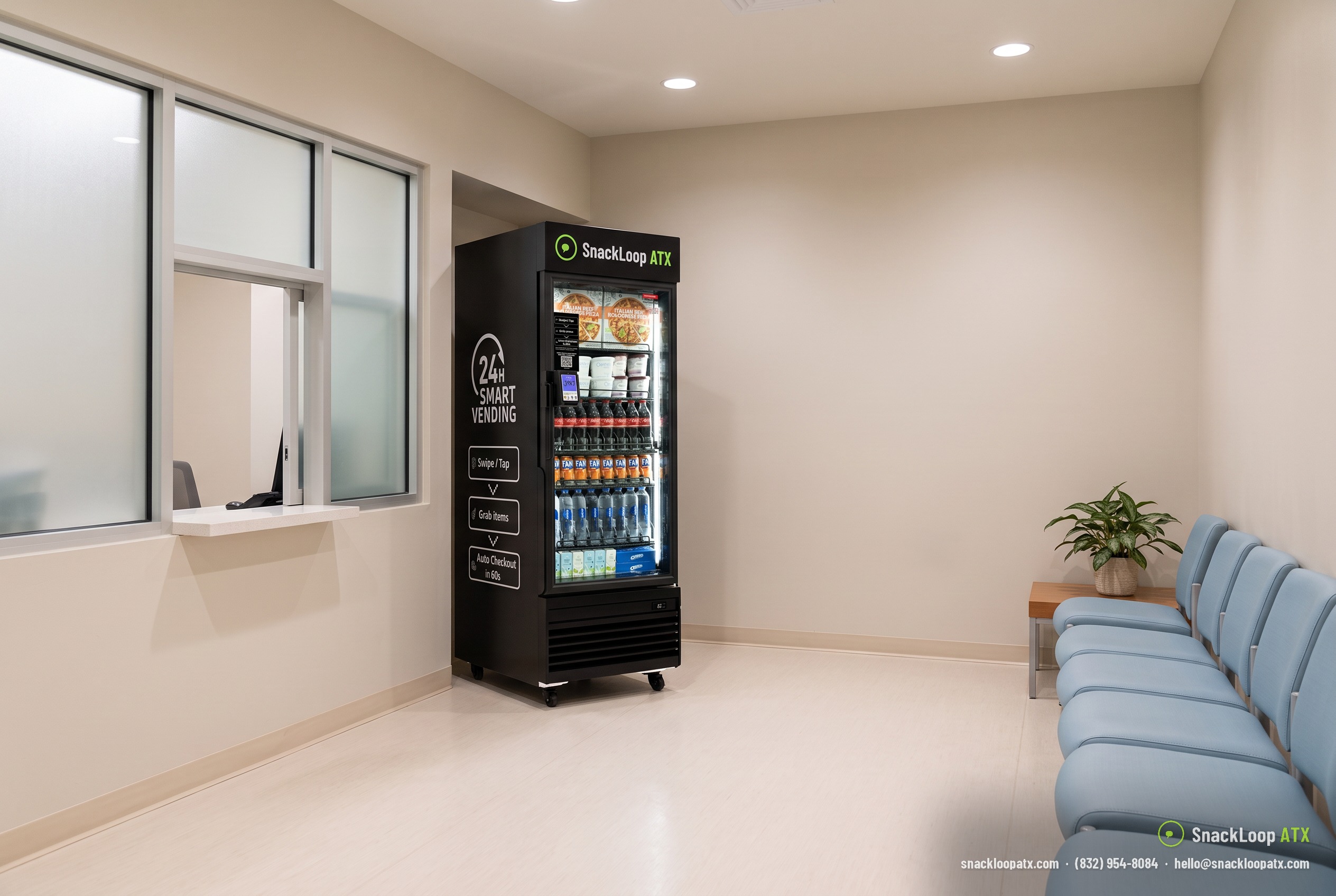
A clinic earns a machine because nobody there can leave. A patient whose appointment is running behind cannot walk out for a coffee without risking their place in the queue, and staff working through a shift change rarely get a break long enough to go anywhere either. That is two separate groups, in one building, both stuck. Dwell time, not the size of the practice, is what makes the machine work here.
Read article →July 8, 2026 · By SnackLoop ATX
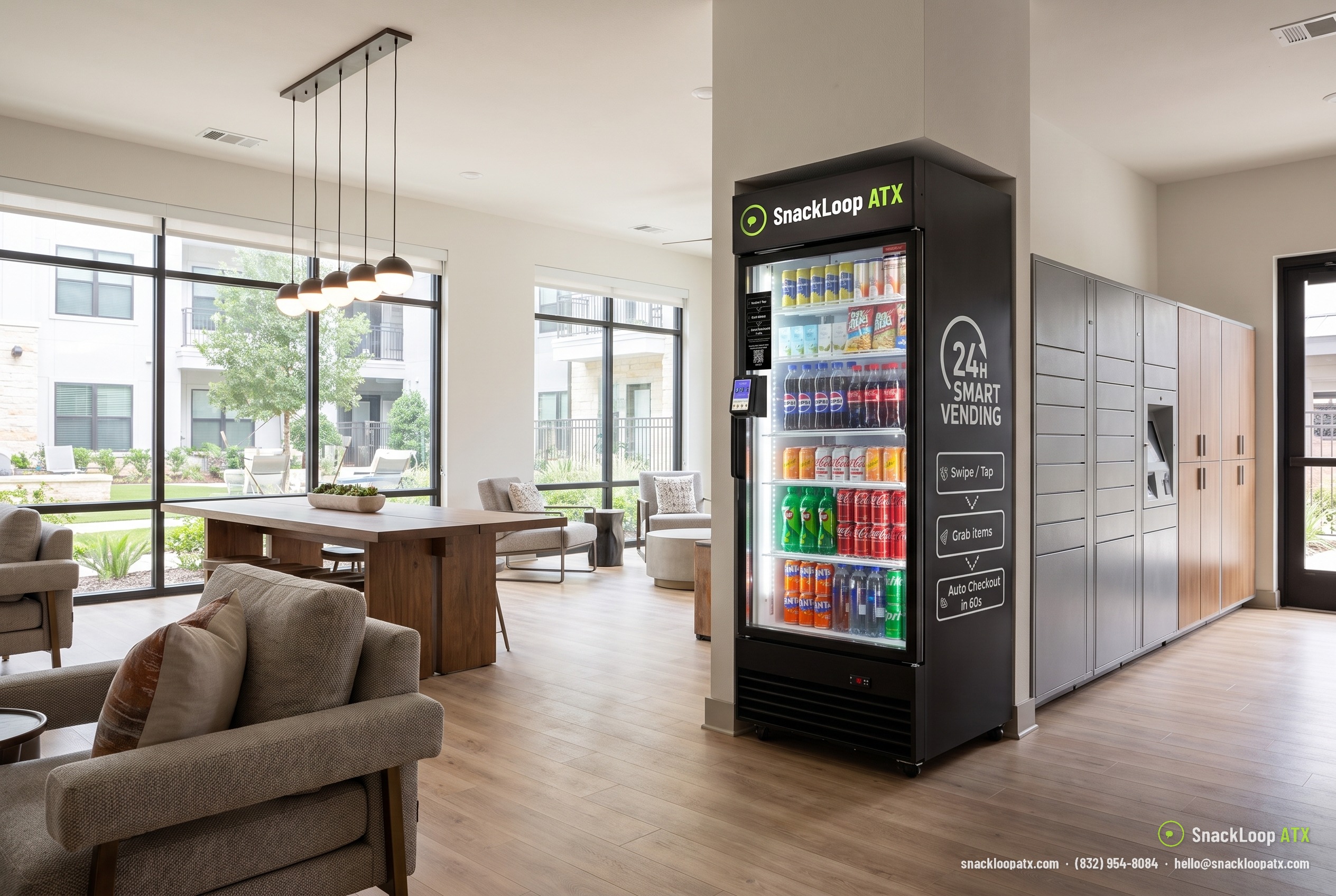
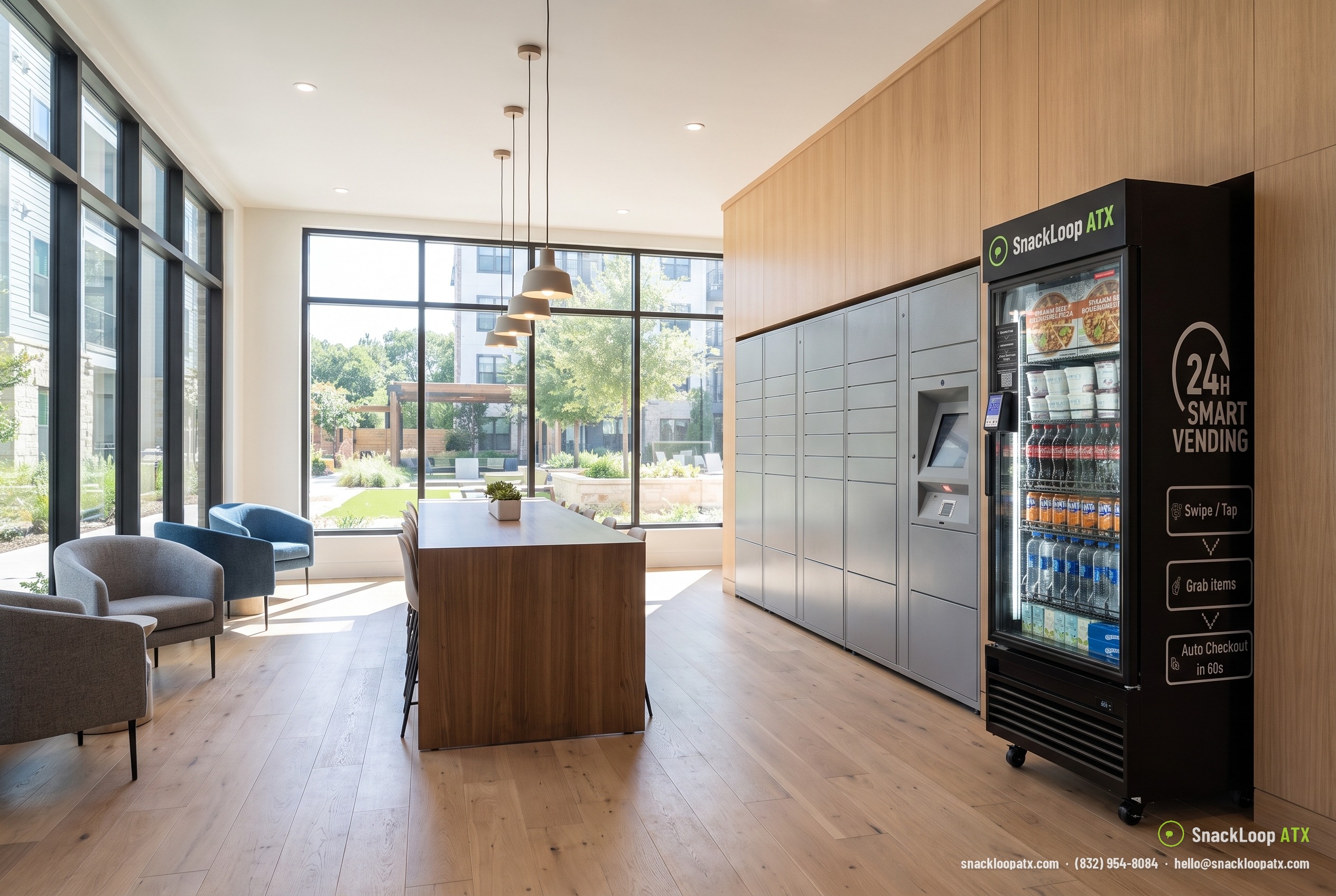
A machine works in an apartment building only where residents are already standing still, which in most buildings means the package room or a genuinely used amenity lounge rather than the lobby. Everyone here has a kitchen upstairs, so it competes with going home rather than with hunger. That makes apartments a harder case than a workplace, and it makes the exact room inside the building the whole decision.
Read article →July 1, 2026 · By Mike Maximov
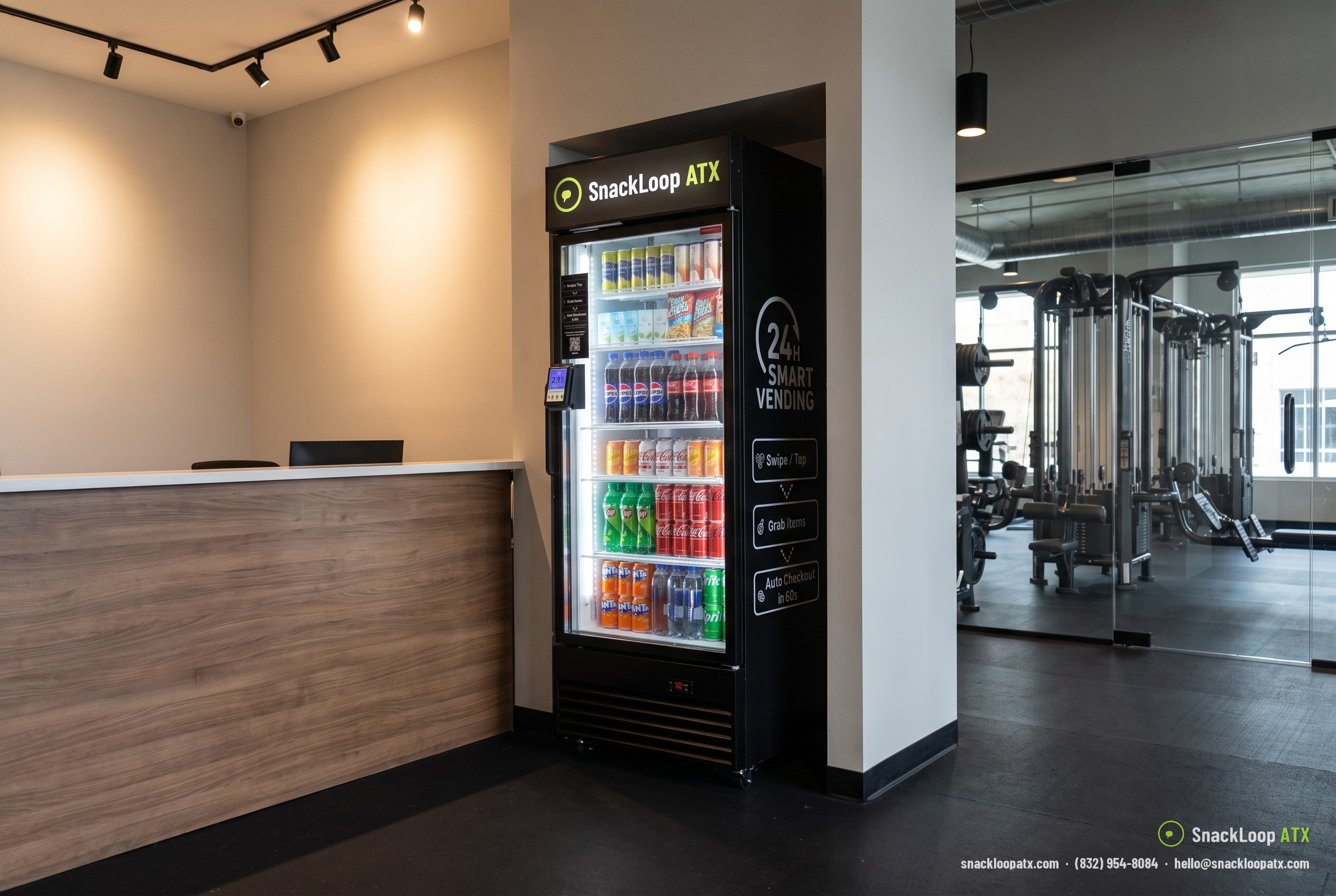
A gym cooler competes with the bottle the member already brought, so it earns its place by covering what nobody packs in advance. That is a narrow job: something cold once the bottle is empty, an electrolyte drink after a hard session in July, the thing they left at home. Stock for the gap, not for a meal.
Read article →June 24, 2026 · By Mike Maximov
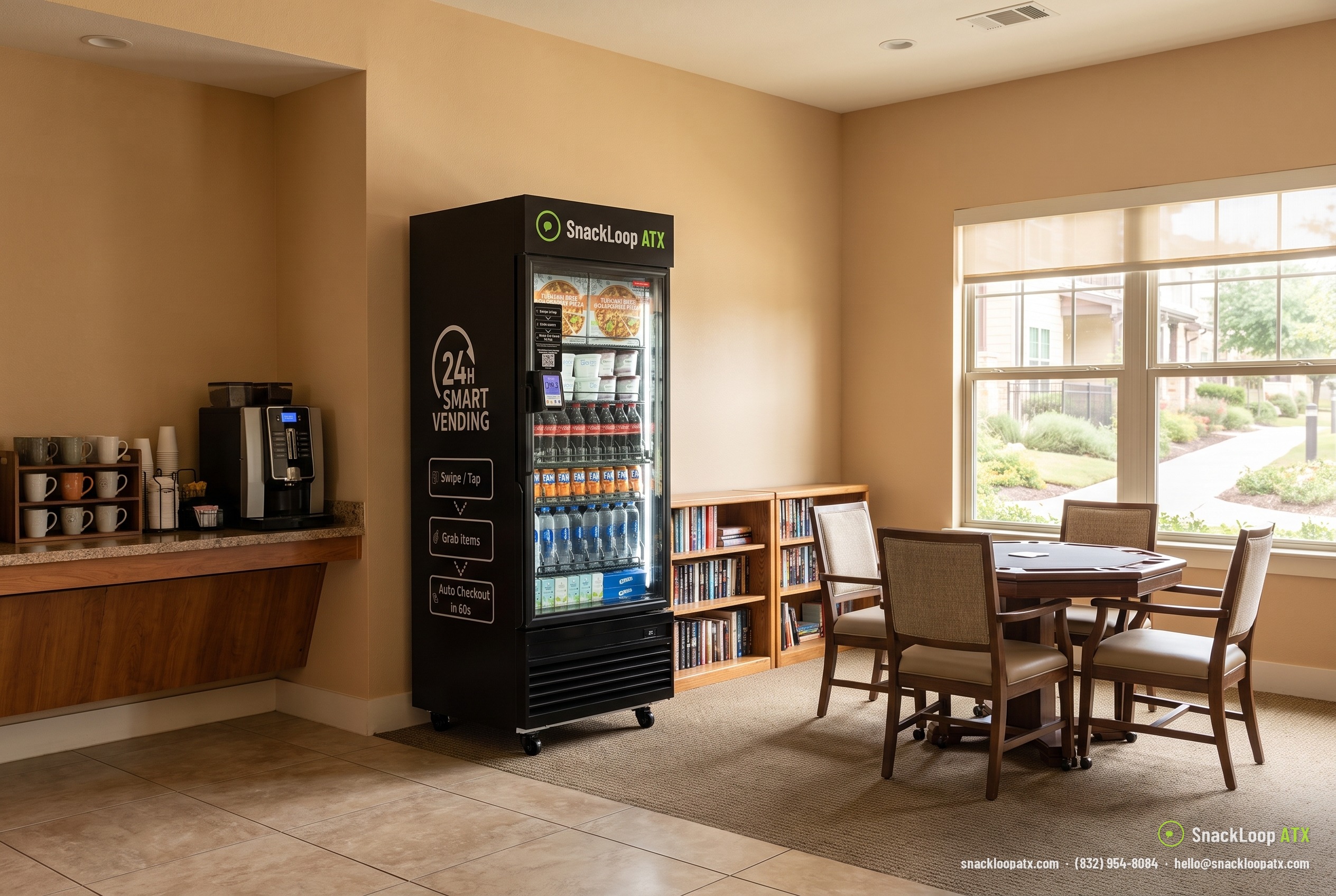
In a 55+ community the machine is not competing with hunger. Everyone has a kitchen a short walk away, so it competes with the habit of going home. That means it earns its place at the clubhouse around what already happens there: cards, classes, the afternoon everyone lingers. It belongs in the amenity column, not the income column.
Read article →June 17, 2026 · By Mike Maximov
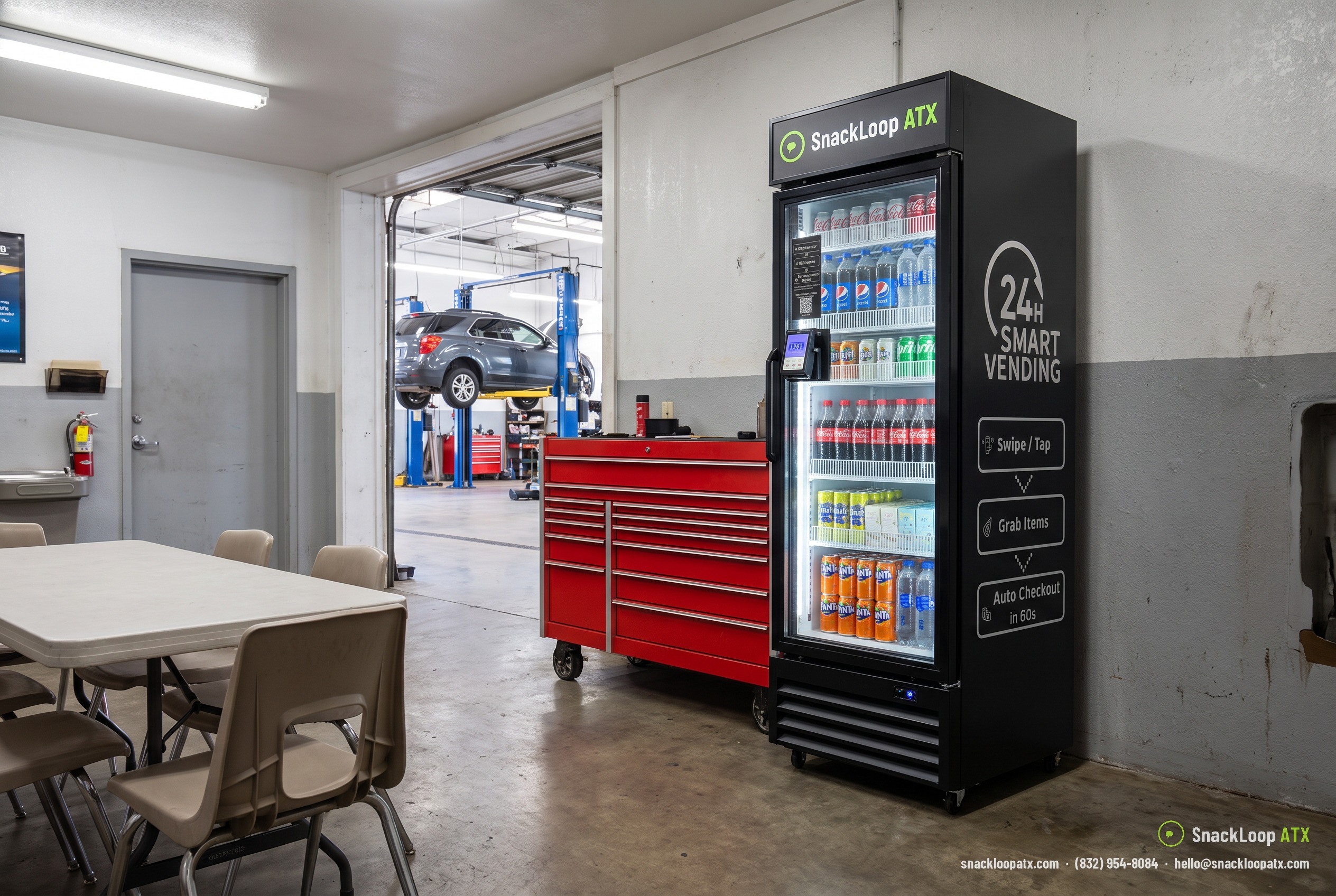
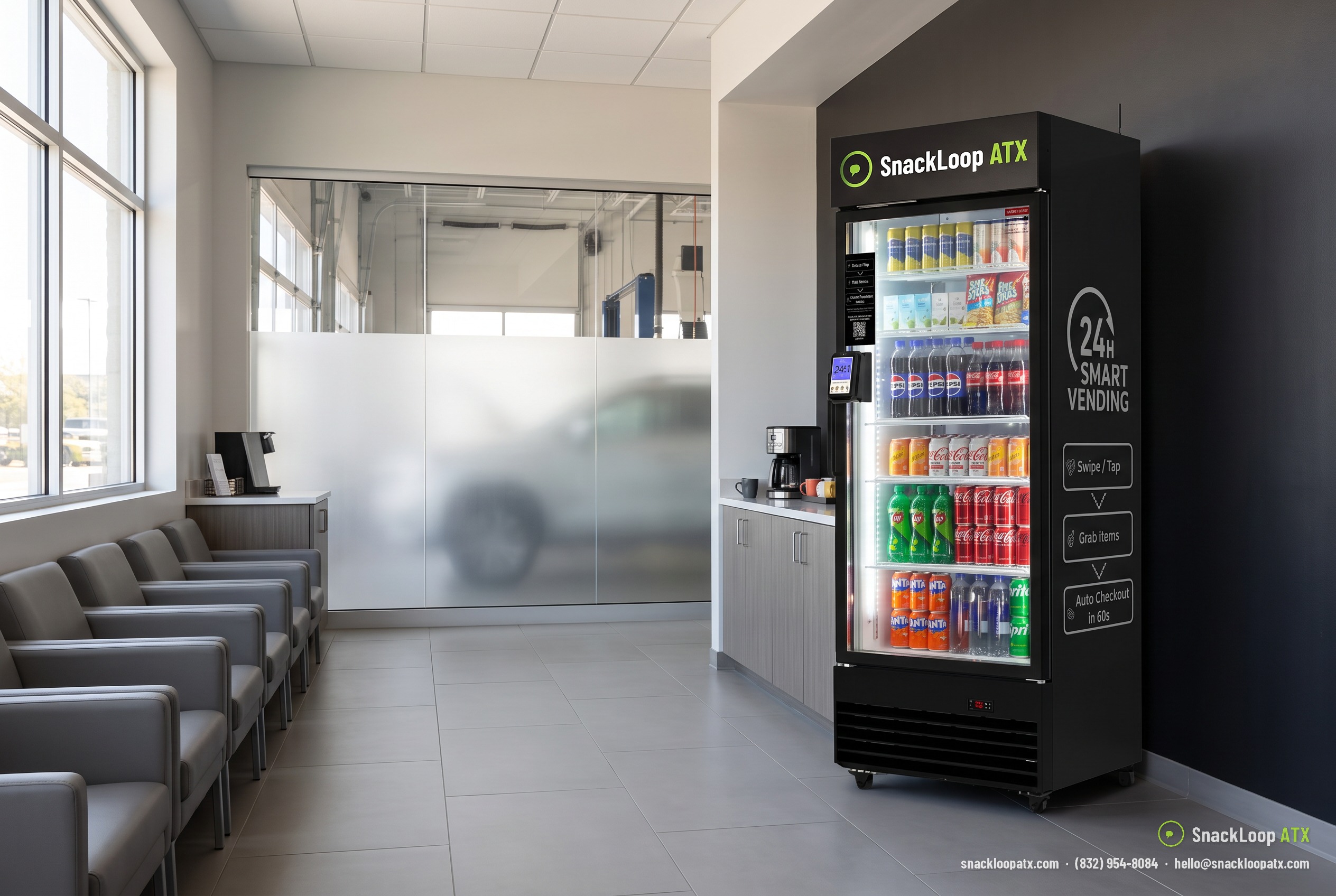
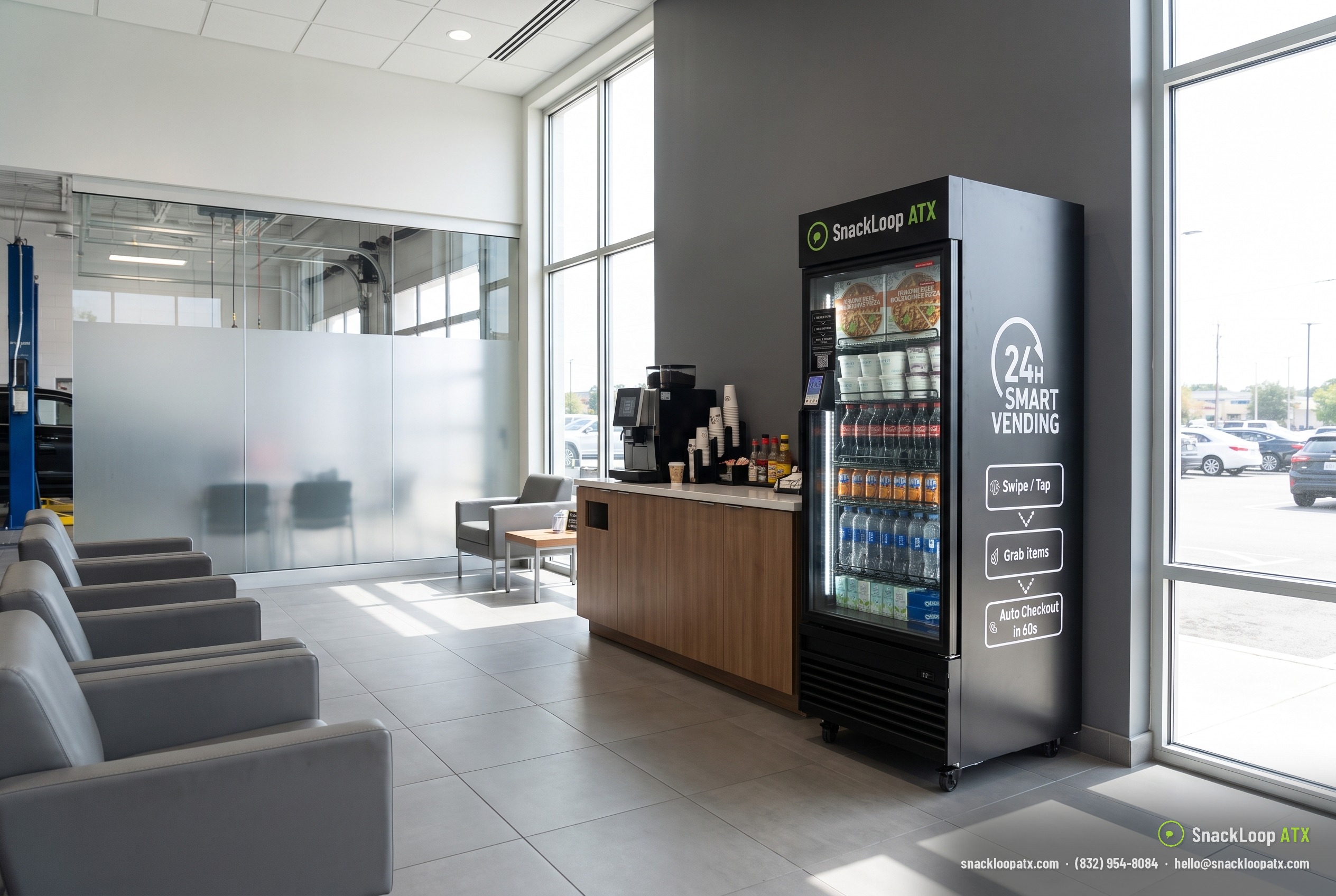
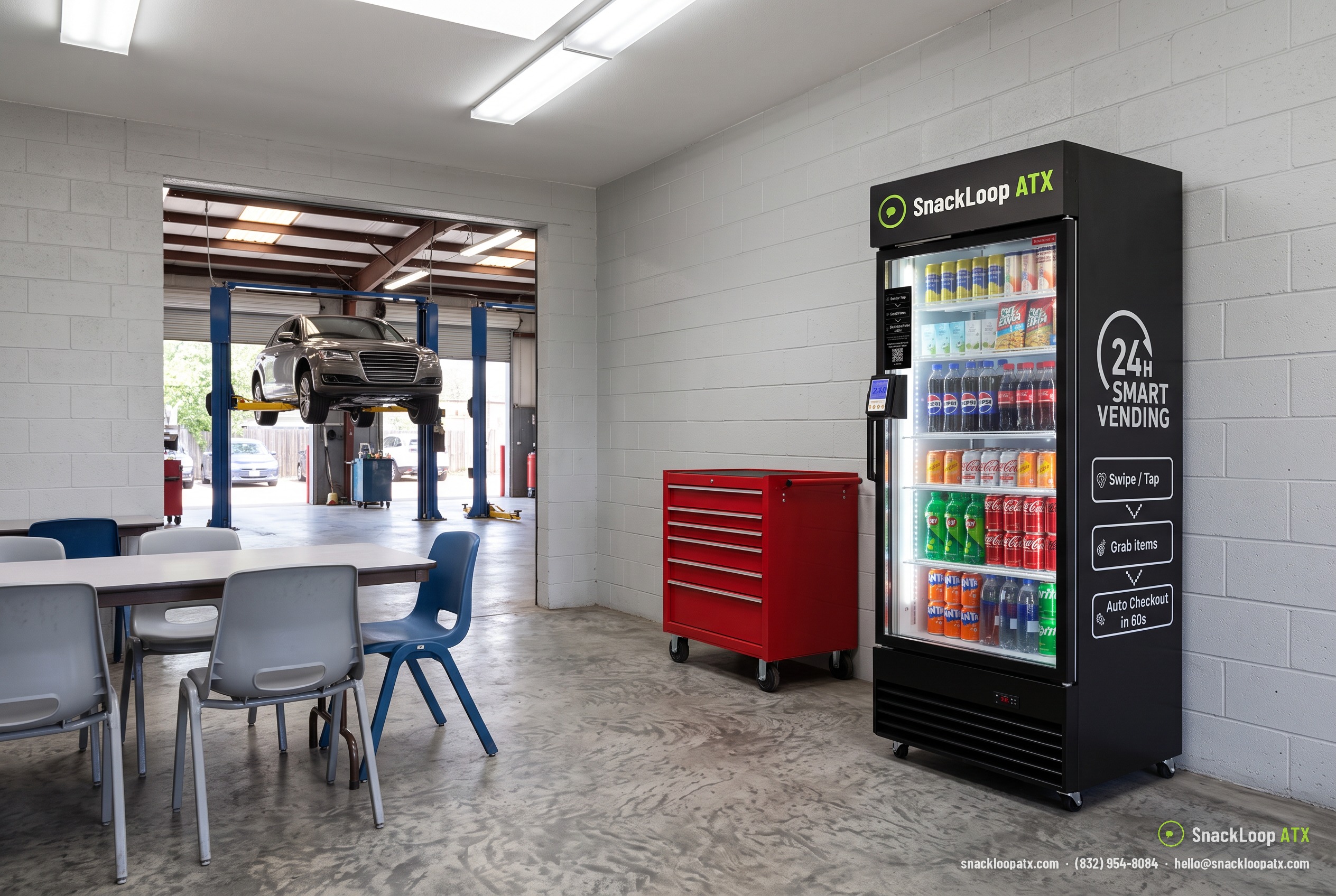
An auto shop has two buyers for one machine and they want opposite things. The customer in the lounge is stuck waiting with nothing to do, so what helps is something that fills the wait. The technician has a short gap between jobs and wants something cold in hand before the next car goes up. Place the cooler where both paths cross, or you are running it at half capacity.
Read article →June 10, 2026 · By Mike Maximov
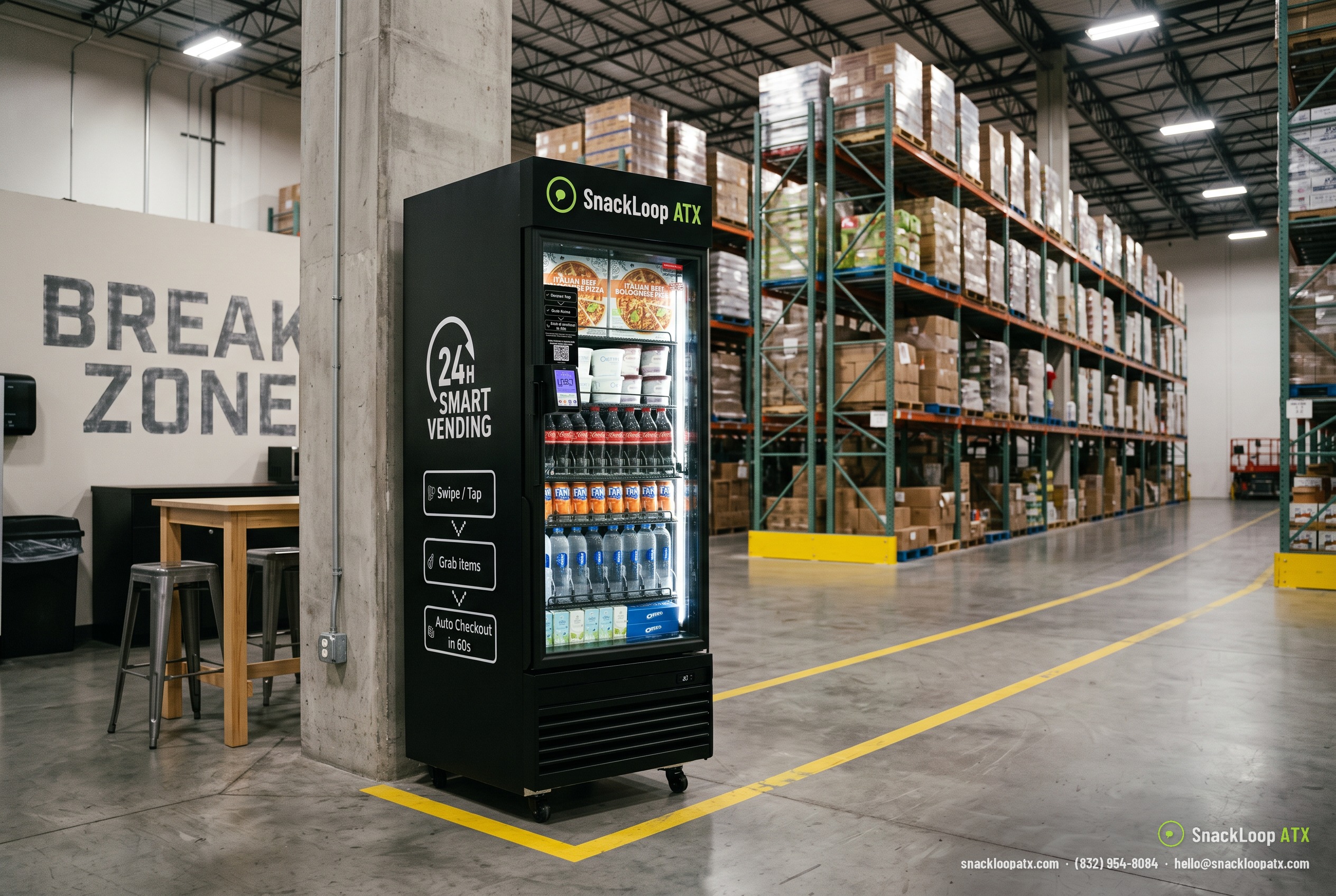
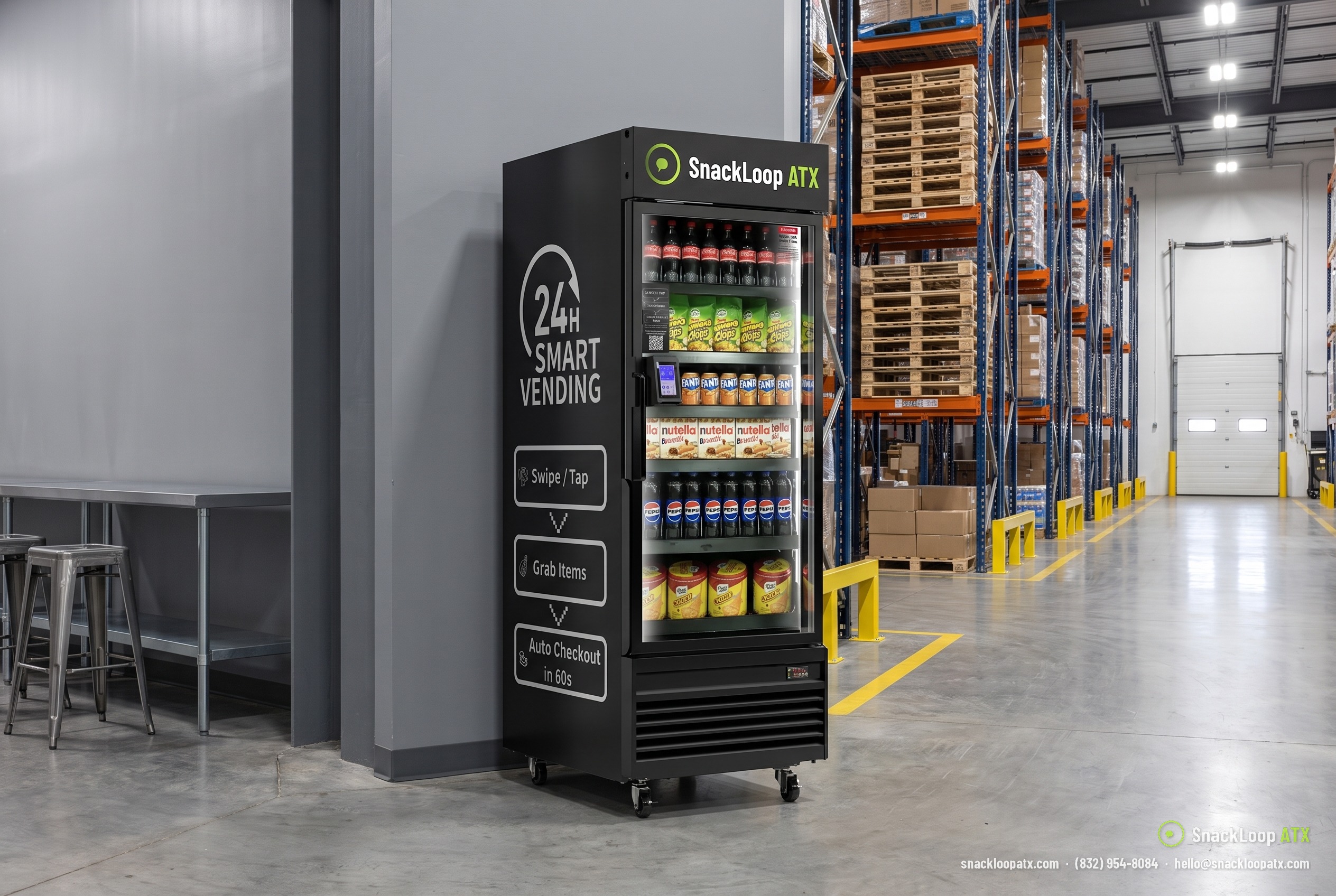
Stock for the break, not for the building. A warehouse break is short, starts at a fixed time, and leaving the site eats all of it, so what sells is cold, filling and fast to open. An office break stretches and has options a few minutes away, so the same cooler ends up selling something small in the afternoon instead. The machine does not change. The break does.
Read article →June 3, 2026 · By SnackLoop ATX
Enough people have to walk past it on a normal day without an easy alternative a few minutes away. That is the real requirement, and it is why a small warehouse office with nothing nearby can outsell a much larger office suite that has a coffee bar in the lobby. Headcount is the number everyone asks about. How stuck those people are is the number that decides it.
Read article →