What happens to the vending machine products nobody buys?
It comes out and something else goes in, and that is our job rather than yours. The harder part is why it stopped moving, because there are four different reasons and they look identical from inside one building. A product that fails everywhere is a bad product. One that fails here but moves elsewhere is a building talking. Telling those apart is the work.
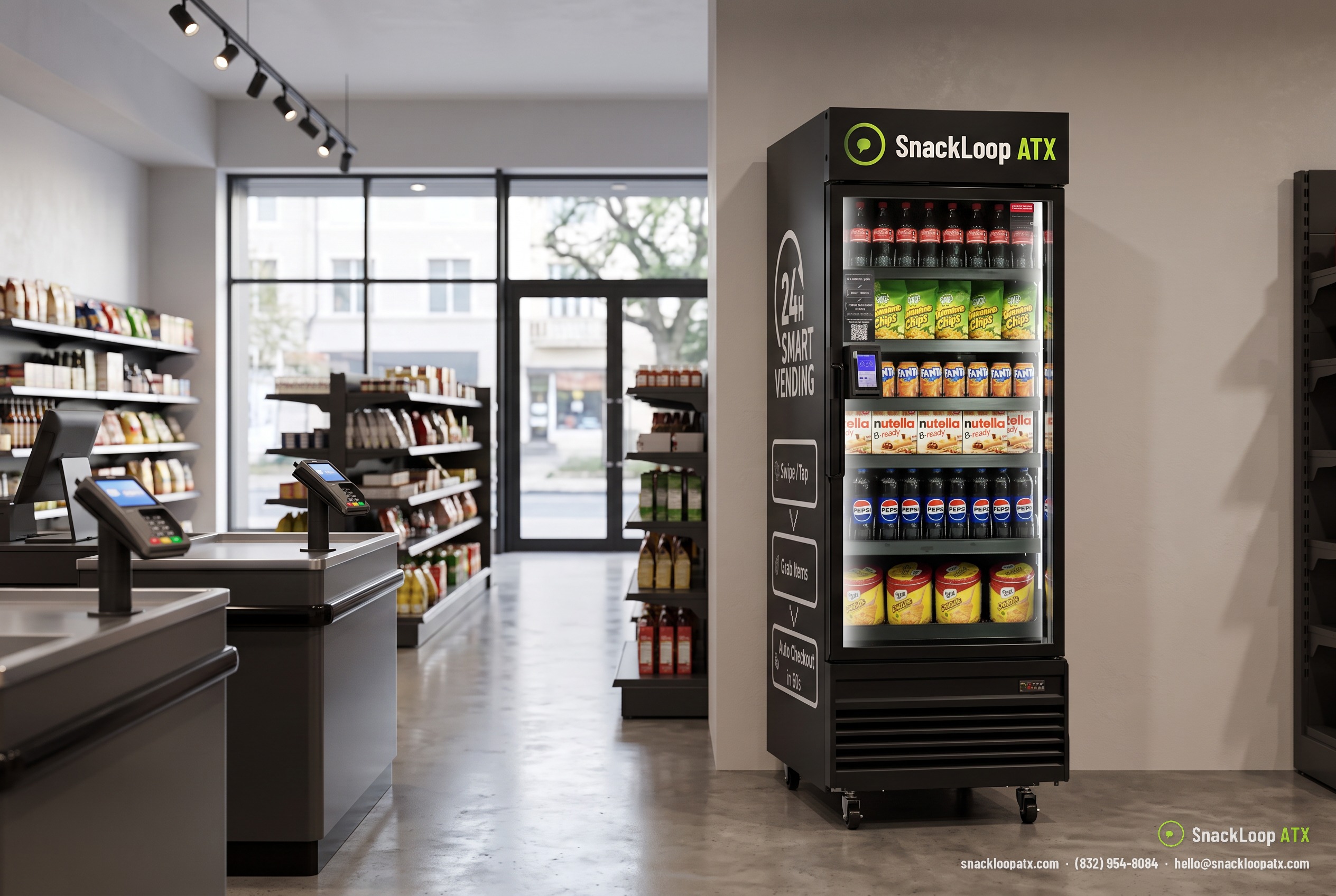
Every machine ends up with something that sits. What is less obvious is that a product going nowhere looks exactly the same from the outside whatever the cause, and the cause is the only thing that decides what to do about it.
We have tried the same items across different kinds of buildings. That is the only way the difference shows up, and from inside one building it does not.
What are the four reasons a product stops moving?
Four, and each one has a different answer.
| What you can see | What it means |
|---|---|
| It moves nowhere, in any building | The product is the problem. Drop it. |
| It moves in other buildings but not this one | The building is the problem. Swap it for something that fits this room. |
| It moved here, then stopped | Our reading is that people got tired of it. Rotate it out. It may come back later. |
| It sells, but it does not belong here | Our call rather than a sales question. It comes out anyway. |
Only the second row is about your building. The other three are about the product, the calendar and our judgment. And "your building" means more than an address: a distribution floor out toward Round Rock and a clinic waiting room are not the same room, even when the machine is.
Why is it so easy to blame the wrong one?
Because the first two rows look identical from where you stand.
A host sees one machine in one building. When an item sits there, the natural conclusion is that the item is no good. The only way to know is to have put that same item into a different kind of building and watched what happened, which cannot be done from inside one breakroom. That is the part we can see and you cannot.
The reverse is just as true. You see what we never will: the people who walk up, look and leave without buying, the request that keeps coming up at the coffee machine. You notice a slow item before we do, because you are there every working day and the person restocking arrives on a schedule.
So report it rather than ruling on it. Naming the item that is sitting, or the thing people keep asking for, beats a theory about why. A sentence to whoever is restocking, or a message. No form, no charge.
What have we found when we moved the same items around?
Two examples, on opposite rows of that table.
Hard boiled eggs, two to a pack, moved well in some buildings and not at all in others. Nothing about the product changed. That is the second row: a decent item in the wrong room, and the fix is a swap rather than a verdict on eggs.
A ham and cheese sandwich moved. A chicken salad sandwich did not move anywhere at all. That is the first row, and it is a different conversation, because once something fails in every kind of building the building has stopped being the variable.
Why that pair splits the way it does is our reading and not a fact we can prove. Ham and cheese is legible through the wrapper. You can see what it is and see that it is intact. A mayonnaise based filling is opaque, and in a machine people seem to skip what they cannot see through. That is a hunch about how a wrapper gets read, and we would rather flag it as one.
Why does the mix keep changing even when things sell?
Our reading is that a shelf goes stale before a product does.
Snack and lunch items get rotated week by week on purpose: packaged grilled chicken one week, sliced steak bites the next. That is the third row of the table, handled before it happens. Our thinking, and it is only thinking, is that something interesting on the first pass becomes furniture. Rotation is not a reaction to a slow item: it is what we do so an item does not become one.
The fourth row is the odd one, because it overrules sales entirely. Energy drinks do not go into senior living or active adult communities. That is a judgment about what suits the building, and it is ours to make whether or not the item would sell.
Do you have to buy, count or dispose of anything?
No. None of the above is yours to carry, which is worth saying out loud, because if you assume otherwise you will not mention the item that is sitting.
The product in the machine belongs to SnackLoop ATX until someone pays for it. You do not buy it, order it, count it, store it, mark it down or throw it away. An item that comes out goes back with us. It is not worthless, it is just in the wrong room.
We deliver and install the machine, stock it, restock it on a regular schedule, and service and repair it at our own cost. You provide floor space and a standard power outlet. Payment is a card or contactless tap with automatic checkout in about 60 seconds, with no cash, no coin mechanism and no keypad codes. Placement terms vary by location and are agreed before installation, and there is no long-term lock-in. If you want us to look at your space, the application form takes about a minute.
What should you judge a machine by?
Not the mix it opened with. That first selection is a guess about a building we have only just met, and a guess is wrong somewhere.
Judge the operator by whether the mix changes. A shelf that looks identical season after season is a service problem rather than a verdict on the location. A machine can stand in exactly the right spot and stay wrong if nobody adjusts it.
That is worth holding onto if your Austin building is already living with a half-empty machine that people have quietly stopped using. It is not proof the location cannot work. It is proof that one arrangement stopped working, which is why switching vending providers without a gap in service is usually a shorter conversation than people expect.
An item nobody buys is information. The only mistake is leaving it there.
Frequently asked questions
What happens to vending machine products that nobody buys?
They come out on a restock visit and something else takes the slot. What happens next depends on why: an item that goes nowhere in any building gets dropped, while one that moves elsewhere but not here just needs replacing with something that fits this room.
How do you know whether the product is wrong or the building is wrong?
By having put the same item into different kinds of buildings and watched what happened. From inside one breakroom those two cases look identical, which is why no host can fairly judge a product alone. What you see, and we cannot, is who walks up, looks and leaves without buying.
Can I ask for specific snacks or drinks to be stocked?
Yes, and it is the most useful thing a host can do. Naming an item, or a category that is clearly missing, saves everyone a round of guessing. What the people standing in front of the machine ask for beats any assumption made from outside the building.
Do I get charged for a swap or for stock that did not sell?
No. There is no charge for changing the selection, no restocking fee and no bill for product that sat. SnackLoop ATX delivers, installs, stocks, restocks, services and repairs the machine at our own cost. You provide floor space and a standard power outlet.
Something people liked disappeared from the machine. Why?
Most likely rotation. Snack and lunch items get changed week by week on purpose. Our own reading is that a shelf goes stale before a product does, so the mix moves before anyone stops noticing it. If your building wants something back, say so and we will look at it.