The site closes, moves, or the lease ends. What happens to the machine?
We come and take it away. The machine and the stock inside it stay ours the whole time, so the end of a site is a pickup on our side rather than something left in your hands. Tell us as soon as you know, since what we need the date for is a truck and not permission. The rest is worth settling before installation, while nobody is in a hurry.
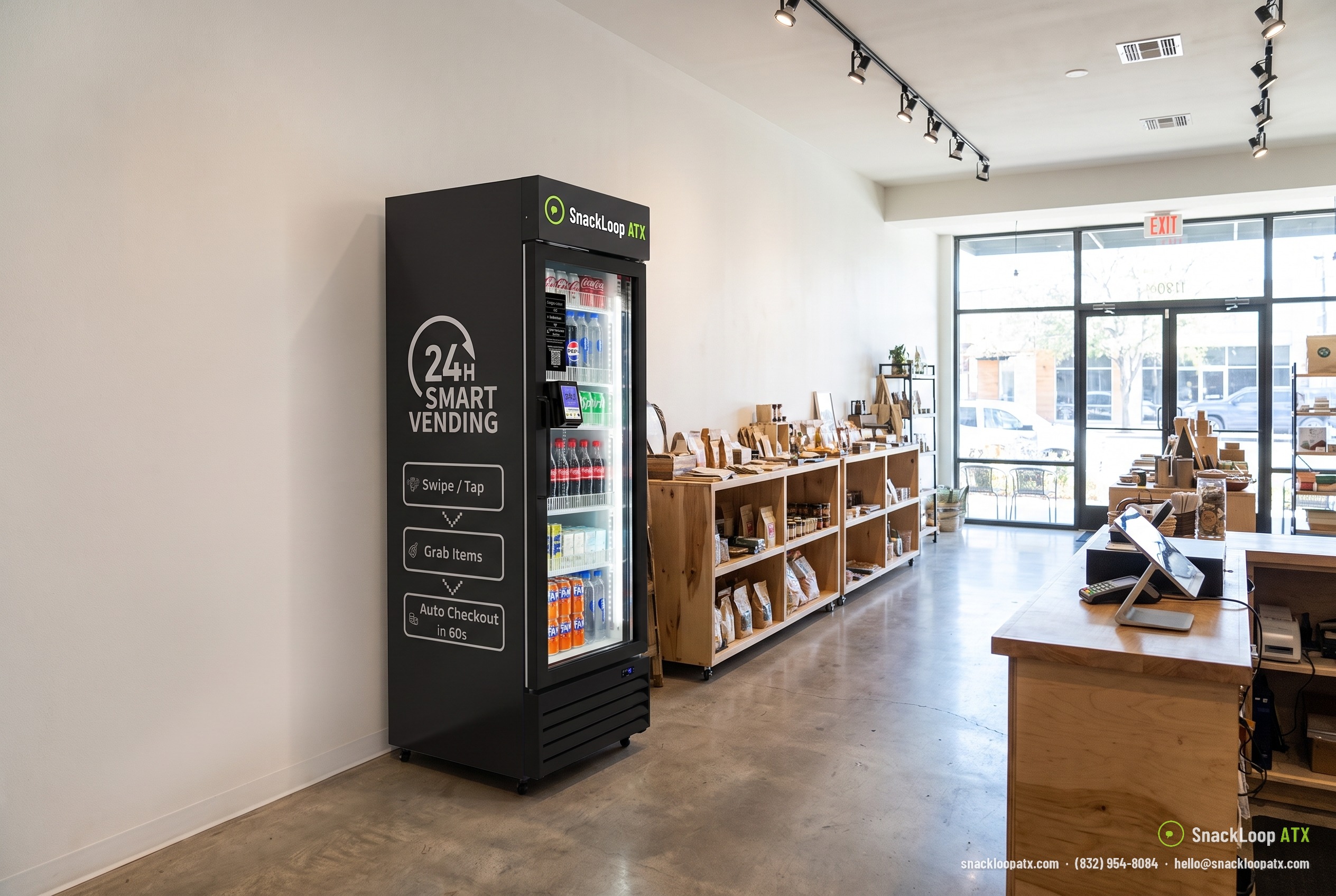
Every arrangement ends. Sites close, businesses outgrow a building, leases run their course, and none of that means something went wrong. The awkward part is that the ending is easy to leave unexamined until it arrives, in the middle of a move or a closure, instead of looked at in the calm stretch before anything is installed. This is that calm moment.
Is a site ending a problem for us?
No. It is the ordinary end of an arrangement, and it happens for reasons that have nothing to do with the machine: a lease runs out, a company takes a bigger space, an owner retires, two locations become one.
Because it is ordinary, it is a fair thing to raise before installation. If you are careful about signing anything, the machine itself is probably not the worry. The worry is creating an obligation you cannot exit. If that is the real question, ask it out loud at the site visit and get the answer while nothing is at stake.
Whose problem is the machine at the end?
Ours. That is the practical weight behind a line that otherwise reads like small print: the machine and the stock inside it remain ours until someone pays for an item.
So the end of a site is a collection, not a disposal. You are not booking a hauler, not parking a large appliance in a corridor while somebody works out who wants it, and not trying to sell it on. We come, we empty it, and we take it out the way it came in. The stock leaves with it, because that is ours too.
What you contribute is access. Someone has to let a truck near the door and a person into the room, which on a moving day belongs on the list next to the other things that need a door held open.
What kind of notice actually helps?
Tell us as soon as you know. Not to ask, to schedule.
That distinction matters more than it sounds. Nobody needs our permission to close or to move, and there is no long-term lock-in, so an early message is not a request. It is a logistics problem with a truck in it, and the earlier a date exists, the easier the date is to hit.
A useful message carries three things: the date the space stops being yours, a name and number for whoever will actually be on site, and the loading situation, meaning where a truck can stand and whether there is a dock, a ramp or a step at the door. If the date is still moving, say so. A rough date beats no date.
Does the machine follow you to a new address?
Not automatically, and it is better to say that plainly than to let anyone assume otherwise.
A move is a new site visit. The business and the people are the same, but the building was always the argument, and buildings differ: where the break area sits, how far the nearest cold drink is, whether there is a spare stretch of wall with a standard outlet on it. A shop that moves from an East Austin storefront into a larger unit out toward Round Rock has changed nearly everything the machine depends on, while the payroll stayed exactly the same.
So we would collect from the old address and look at the new one on its own terms. Sometimes that is the same machine in a new room. Sometimes it is a different one, since a slim drinks cooler suits a space that a full combo unit would crowd. Sometimes the honest answer is that the new building does not suit a machine, and that is better heard than discovered.
What if you rent and the landlord is the one ending it?
Then little changes on our side, and you should still tell us.
Whatever is happening between a tenant and a building is between them, and we are not the people to advise on it. What we need is the same short list: a date, a way in, and a contact who is still reachable on the day. Add who is handling the space by then, because a machine can otherwise sit in a room where the contact you gave us has gone and the person with the key has never heard of us.
If the space is not ending but the operator is being changed, that is a different question with a different answer, and switching vending providers without a gap in service covers it.
What should you settle before the machine arrives?
Ask these at the site visit, not at the end. They are what makes the ending boring.
| Question to settle up front | Why it matters when the site ends |
|---|---|
| Who owns the machine and the stock in it? | Decides whether the ending is a pickup for us or a disposal problem for you. |
| Is there a long-term commitment? | Decides whether leaving is a message or a negotiation. There is no long-term lock-in here. |
| Who do I tell, and how? | A name and a number beat a general inbox on the day a truck has to be booked. |
| How does the machine physically leave? | A doorway, an elevator and a place for a truck are easier to check now than on a moving day. |
| What if we move instead of close? | Sets the expectation that a new address is a new site visit. |
| What are the placement terms here? | They vary by location and are agreed before installation, so the time to have that conversation is now. |
None of this is a reason to hesitate. It is the opposite. Hesitation comes from leaving the exit unspoken, and an unspoken exit is where the imagination does its worst work.
SnackLoop ATX delivers and installs the machine, stocks it, restocks it on a regular schedule, and services and repairs it at our own cost. You provide the floor space and a standard power outlet. Payment is a card or contactless tap at the machine, with no cash, no coin mechanism and no keypad codes, and checkout completes automatically in about 60 seconds. If you would like us to look at your space, the application form takes about a minute.
Frequently asked questions
We are closing the business. What do we do with the machine?
Tell us and we will arrange to collect it. The machine and everything in it belong to us, so nothing about it lands on your closing list. What we need is a date and a way into the space on that date, since the only real constraint is getting a truck to the door.
How much notice do you need?
As early as you can manage, and the reason is scheduling rather than permission. There is no long-term lock-in, so you are not asking us for anything. You are giving us a date to send a truck. If the date moves, tell us the new one and we work from that instead.
We are moving to a new address. Does the machine come with us?
Not automatically. Treat it as a new site rather than a continuation, because the same business can occupy a building that suits a machine and then one that does not. We would collect from the old address and look at the new one, and the answer there depends on the space, the outlet and who walks past it.
We rent, and our landlord is ending the arrangement. What changes?
For us, very little. We still need a date and a way into the space, and the machine still leaves as our equipment. Pass on whoever is handling the building at that point so we are not chasing a contact who has already moved on. Anything between you and your landlord is yours to handle.
Is there a contract we have to get out of?
There is no long-term lock-in, so leaving is not a negotiation. You provide floor space and a standard power outlet, and we deliver, install, stock and restock the machine on a regular schedule and repair it at our own cost. When that stops suiting your building, we collect the machine.