Allergens and staff requests: who decides what goes on the shelf?
You do, within limits. The host shapes the mix by asking, and a request put in writing is easier to act on than one mentioned in passing. What the host cannot do is turn a shared machine into an allergen free environment, because it is not one and should never be described as one. Here is how to ask, how to read the requests you get, and where the honest limit sits.
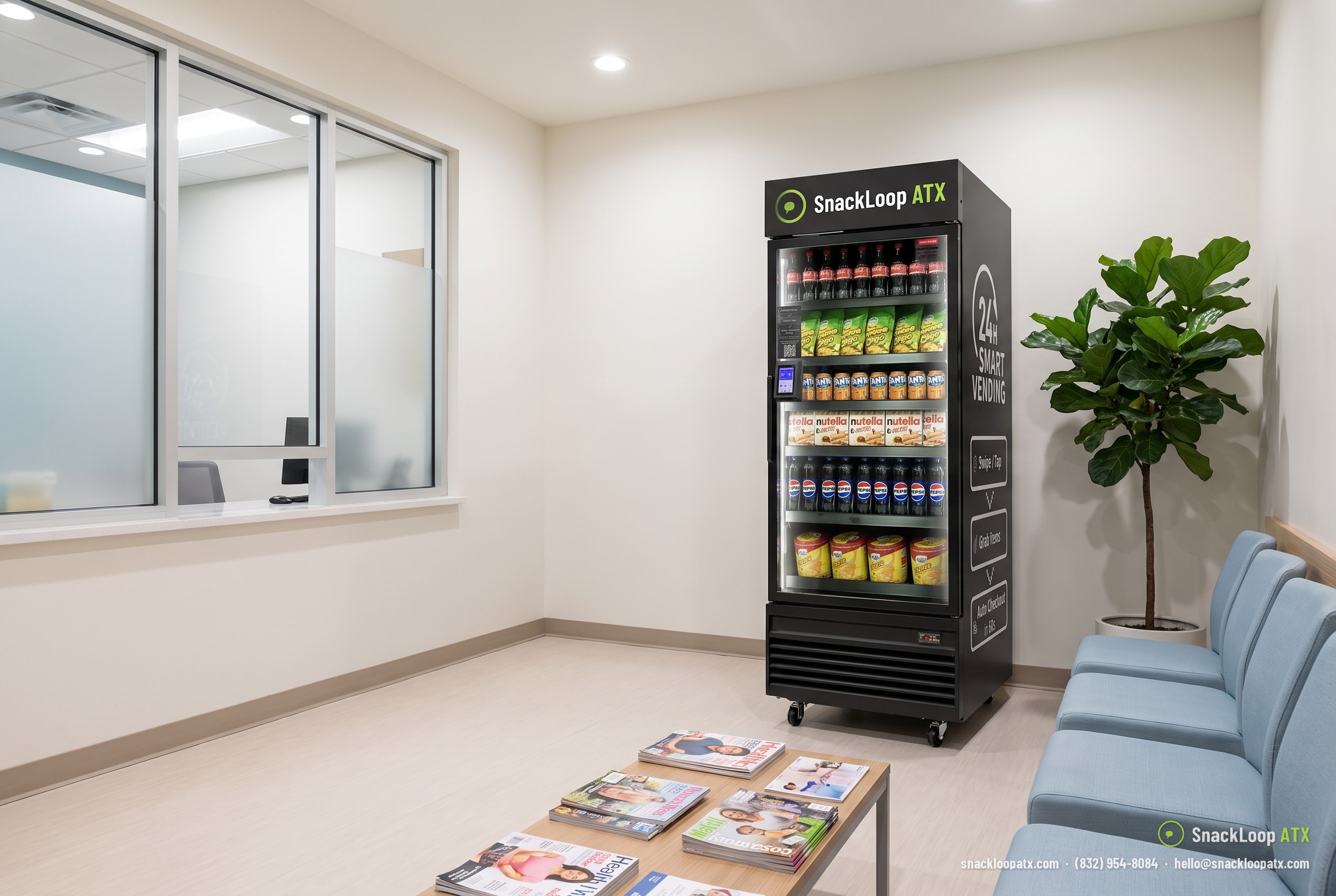
A host with a machine gets asked for things. Someone wants a nut free option. Someone wants sugar free. Someone wants one brand and will mention it every week until it appears. All three are the same request: change what is on the shelf. The host can do that, and mostly does not realize how much.
Can the host decide what goes in the machine?
Yes, within what a machine can physically hold and what a supplier can get.
A machine has a fixed number of slots, so every product added is a product removed. That makes the useful request a swap rather than a wish list: this in, that out. Send it in writing rather than mentioning it to whoever happens to be at the machine, because a written note stays on file and survives the day the office manager changes.
Three kinds of request are easy to act on. A category works: nothing listing nuts, nothing listing sugar, something that is not a soda. A named product works better, with the exact size. Best of all is naming a slot to empty, because untouched stock is the cheapest space to free up.
How do you tell one loud request from a real pattern?
By checking whether the request survives contact with anybody else.
One person asking loudly is not evidence of demand. It is also not nothing, because one person will sometimes say out loud what others never mention. The difference is not volume. It is spread.
| What you heard | What to check before calling it a pattern |
|---|---|
| One person names one brand, repeatedly | Whether anybody else has ever mentioned it, or whether the machine is being read as a personal shopping list |
| Different teams or shifts want the same category | Spread across groups says more than volume from one person |
| Nobody asks for anything | Whether people know that asking is even an option |
None of those rows is a result. They are questions to put to your own building before passing a request along: a slot given to one person's brand is a slot taken from everyone else.
A request can still be information when only one person makes it. We have been asked for Big Red, a Texas soft drink, and for particular bottled waters. Neither is a favor. Both say something about what people in that building drink, which no national product list can predict.
That is also where the mix quietly gets decided. A list built to work across many states carries what works across many states, and a Texas regional soda is not that. Stocking locally means a request like that can be looked at on its merits. Nothing is guaranteed, but a request only counts once it reaches somebody able to say yes, and the host is who passes it along.
What happens when someone asks for a nut free option?
Two things, and they are not the same thing.
The first is straightforward. We can stock products whose labels do not list nuts as an ingredient, and a host is entitled to ask. As a stocking request it is ordinary and gets handled like any other change.
The second is where we would rather be blunt than agreeable. A shared vending machine is not an allergen free environment, and we will not describe it as one. One cabinet holds products from many manufacturers, and everyone in the building uses it. Taking nut products out does not turn a machine into something a person with a nut allergy can rely on, and no vending company should say otherwise to win a placement.
So ask us to change the mix. Do not announce the result to a building as allergy safe. We would not put our name to that.
Where does allergen information actually come from?
From the manufacturer, printed on the package.
Everything in the machine is a sealed packaged product made by somebody else. The ingredient list on the wrapper is theirs. We did not write it, we have no way to verify it, and we will not condense it into a sign taped to the glass.
So the only ingredient information we can point to is the package itself, and questions about a product go back to the package or its maker. That is the difference between passing information along and inventing authority we do not have.
What if a building genuinely needs a controlled environment?
Then a shared vending machine is the wrong tool, and we would say so before installing one.
Some places have a real reason to control what food comes in: a clinical setting, a program with children who have documented allergies, a workplace where somebody's medical situation makes this more than a preference. That need is legitimate, and a machine open to everybody cannot meet it: it is stocked to a request, not to a standard.
The decision belongs with whoever is responsible for health and safety in the building, not with a vending company. Declining a placement costs everyone less than installing one on a promise it cannot keep.
What does the host provide, and what do we handle?
Space, power, and the requests. The rest is ours.
SnackLoop ATX delivers and installs the machine, stocks it, restocks it on a regular schedule, and services and repairs it at our own cost. The host provides floor space and a standard power outlet. Nobody on site orders product, counts inventory or handles money. Payment is a card or contactless tap, with no cash, no coin mechanism and no keypad codes, and checkout completes automatically in about 60 seconds.
Requests are the part a host is closest to. You know whether the upstairs team in an East Austin office comes down to the breakroom, and whether a late crew at a site out toward Round Rock overlaps with the early one. We do not.
Placement terms depend on the location. They are agreed before installation, and there is no long-term lock-in. If you want us to look at your space, start with the application form.
If you already have a machine whose provider has never once acted on a request, that is a different problem. We wrote separately about changing vending providers without a gap in service.
Frequently asked questions
Can I ask for specific products in the machine?
Yes. Name the category or the product, and say what should come out to make room, because a machine has a fixed number of slots. Put it in writing so it survives a change of staff. A swap is easier to act on than a wish.
Can you make the machine nut free?
We can stock products that do not list nuts as an ingredient, if you ask us to. We will not call the result a nut free machine. A cabinet holding products from many manufacturers and used by everyone in a building is not an allergen free environment.
Where do I find allergen information for a product?
On the package, from the manufacturer who made it. Every item is a sealed packaged product, and the ingredient list belongs to its maker rather than to us. We do not rewrite it, summarize it, or post our own version on the glass.
One employee keeps asking for a brand nobody else mentions. Should I pass it on?
Pass it on, and say that it came from one person. That context matters, because a slot given to one brand is a slot taken from something else. If the same category comes up across teams or shifts, the case is stronger.
We need a strictly controlled food environment. Can vending work?
Probably not, and we would tell you so before installing anything. A shared machine is stocked to requests, not to a standard, and nobody supervises what people take out of it. That decision belongs with whoever handles health and safety in your building.