The building changed management and there is a vending machine in the lobby
You did not buy it and it did not come with the building, so the first move is to find out who put it there and ask, not to decide what to do with it. Start at the machine and look for a name, then the vendor records, then the manager who left. Once you have them on the phone, a few questions settle the service schedule and the paperwork that now has the wrong name on it.
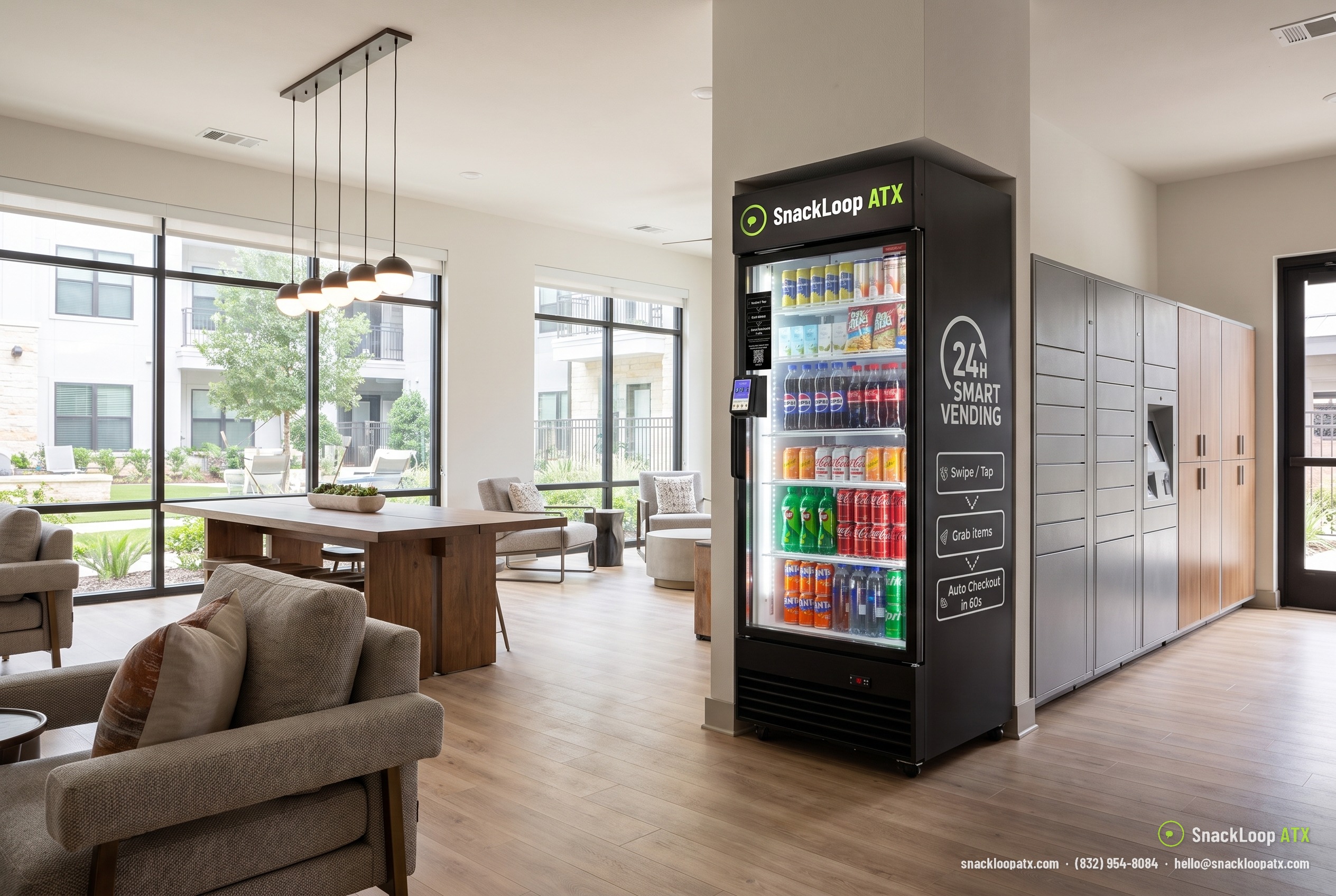
You took over an Austin building and there is a vending machine in the lobby. You did not choose it, nobody left a file about it, and the person who agreed to it has moved on. It looks like an inherited problem. It is closer to a missing phone number.
Who does the machine in the lobby actually belong to?
Ask the operator who placed it. A vending machine did not arrive with the building the way the mailboxes did. Somebody delivered it and somebody stocks it, and the arrangement behind it was made with a person who is no longer here.
That matters most in your first week, when the temptation is to tidy. Do not sell it, scrap it, move it into storage or put it out for collection. Whatever happens to it is a conversation with whoever put it there, not your decision alone.
Here is what our own arrangement looks like. We deliver the machine, install it, stock it and restock it on a regular schedule, and we service and repair it at our own cost. The machine and the stock inside it stay ours. The host provides floor space and a standard power outlet. If the machine is ours, call us and we will tell you exactly what was agreed for the site.
How do you find out who put it there when nobody left a file?
Work outward from the machine, and stop as soon as you have a name.
| Where to look | What you are hoping to find |
|---|---|
| The machine itself, front and sides | A company name, phone number or service label |
| The payment screen, if the machine takes cards | A brand name shown when a card is tapped |
| Vendor and invoice records for the site | An entry tied to the address, not a department |
| The outgoing manager, or their assistant | The name of the person they actually called |
| Building staff who work the floor | Who arrives to restock, and roughly how often |
The last row is the one people skip. A front desk attendant or a maintenance lead has watched somebody open that machine and refill it, and what they remember may be all you need.
What should you ask the operator in the first conversation?
You are not renegotiating anything on that call. You are filling a file that does not exist yet.
What was agreed for this site, and when? You need the shape of the arrangement and its age before you can have an opinion about it.
Who is my contact, and who is yours? Get a name and a direct number, and give them yours. Ask whether the person you call about an empty machine is the same one you call about a broken one.
How often is it serviced? With us the answer is a regular restocking schedule, with service and repair at our cost. Knowing the rhythm tells you whether what you see in the lobby is what the schedule looks like on a normal week.
What happens if we want it moved or taken out? Ask this while everyone is friendly, not during a dispute. With us there is no long-term lock-in.
Who receives whatever was agreed, now that the manager has changed?
Ask, and ask in writing. That is a specific answer, and the operator has it. Our own placement terms vary by location and are agreed before installation.
Our agreements are made about a location: the address, the space, the outlet, the machine. They are not made about the individual who signed the email. What a change of management does is make the contact details on file wrong, quietly, until the day somebody needs them.
That is why it is worth asking rather than assuming. Ask the operator to put your name, direct line and email on the record, to tell you what they hold for the site, and to send you a copy.
Does the inherited machine still fit the building?
This is the honest question, and it is not the same as whether you like the machine.
A machine that suited this building when it arrived was chosen for the people who were in it then. Since then a floor may have turned over, hours may have shifted, or a lobby that used to be a thoroughfare may now be somewhere people badge through without stopping. The management changed, but so, possibly, did the building.
So look at it as it stands. Is the machine in the path people actually walk, or in a corner they pass at an angle? Does the selection match who is in the building now rather than who was? An Austin block that had nothing on it when the machine was installed may have a coffee shop on it today, and that changes what the machine is there for.
If the answer is that it no longer fits, that is a conversation with the operator, not a reason to unplug anything. Sometimes the fix is the product mix. Sometimes it is a smaller machine, or the same machine a few steps closer to the door. And sometimes you want a different operator, which is its own small project: we wrote about switching vending providers without a gap in service separately.
If you would rather have someone look at the space with fresh eyes, the application form takes about a minute. Payment is a card or contactless tap, with automatic checkout in about 60 seconds and no cash, coin mechanism or keypad codes to think about.
What should the outgoing manager leave behind?
A short note, and it costs you almost nothing.
Write down the operator's name, the name and number of the person you actually called there, and what was agreed for the site. Add roughly how often somebody comes to restock, and who lets them in. That is the entire handover. Whether the site is a South Congress storefront, a clinic in Cedar Park or an office park out toward Round Rock, the note is the same and so is its value.
The machine will keep working without that note. Your successor will not. They will spend their first weeks doing what the first half of this article describes, and the only reason will be that nobody wrote down a phone number.
Frequently asked questions
The building changed management. Do we have to keep the vending machine?
That is a question for the operator, and with us there is no long-term lock-in. What you should not do is treat the machine as an inherited asset and dispose of it, because you did not buy the machine or the stock inside it. Call first, then decide together what happens to it.
Nobody left any paperwork. How do we find out who put the machine there?
Look at the machine first, front and sides, for a company name, a phone number or a service label. Then check the vendor and invoice records tied to the address rather than to a department. Then ask the outgoing manager or their assistant, and the building staff who see who restocks it.
Who should the operator be talking to now that the manager has changed?
You, and it is worth saying so explicitly rather than assuming it filtered through. Ask for the record to be updated with your name, your direct phone number and your email, and confirm who on your side can let a technician in. Wrong contact details are how a building ends up without anyone to call.
What should the outgoing manager hand over about the machine?
A few lines is enough: who the operator is, the name and number of the person you actually called there, and what was agreed for the site. Add the rough service schedule if you know it, and who lets a technician in. That note is quick to write and saves your successor a lot of guessing.
What if the inherited machine no longer suits the building?
Say so to the operator rather than unplugging it. Sometimes the fix is the product mix, sometimes a different machine or a better spot in the lobby, and sometimes it is a different operator. All three start the same way, with someone looking at the space as it is now rather than as it was.