Your vending machine is half empty. What is that telling you?
Either it is selling faster than it is being filled, or nobody has come to fill it, and from the doorway those two look identical. The gaps tell you which. Rows that sold out since the last visit leave a different pattern than rows nobody has touched in weeks. The second pattern is not a verdict on your building. It is a question about who is coming.
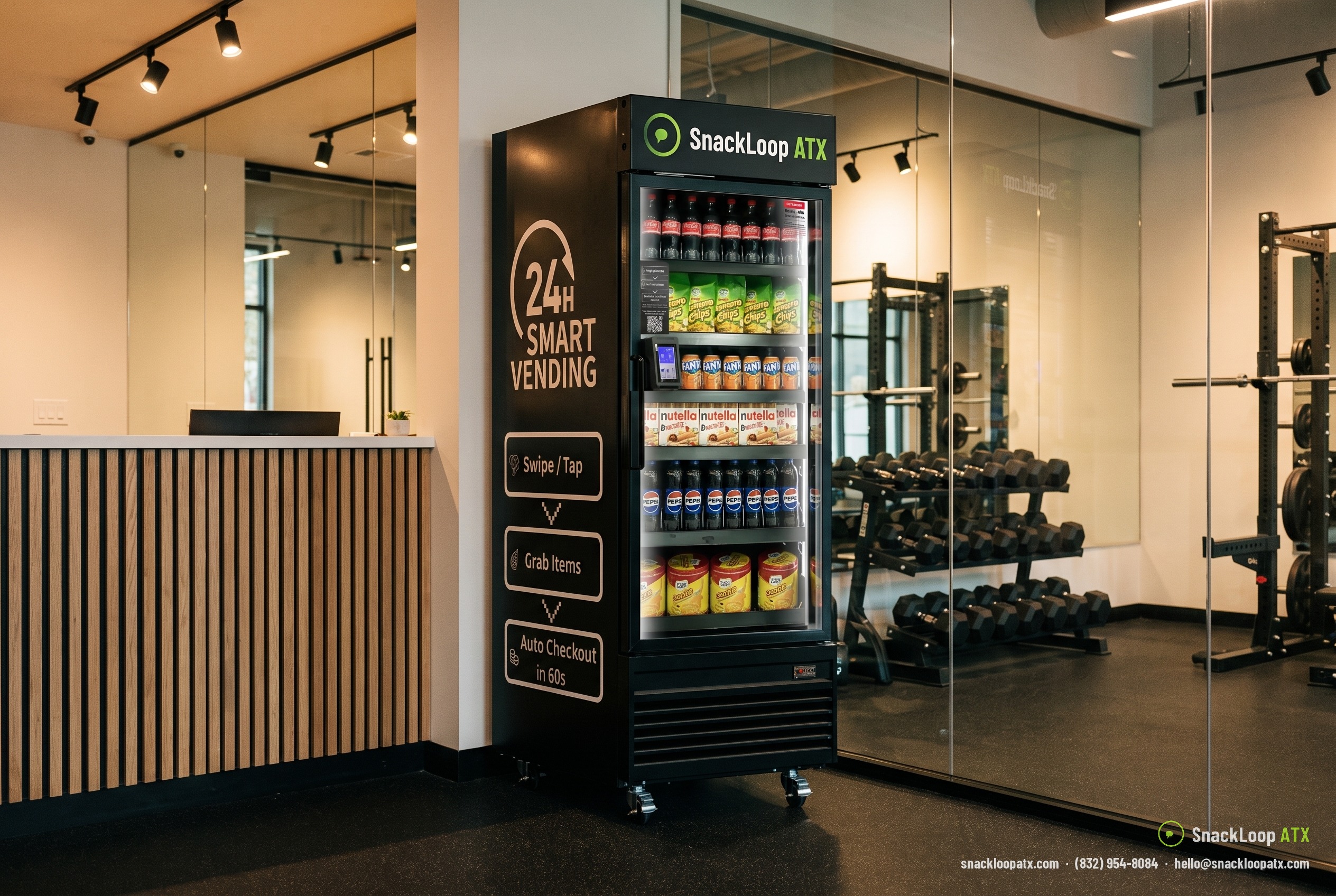
I stock machines for a living, so I can tell you what I would look at in your lobby, and what I would want from whoever services yours.
A machine with holes in it is not one problem. It is two, and they pull in opposite directions. One machine thins out between visits because people are buying from it. The other thins out because nobody is coming. From the doorway they look the same.
Is the machine emptying out, or being left alone?
A machine that sells thins unevenly. The rows people want go first and the rest sits roughly where it was. That is a machine doing its job with too little space given to what moves, and the fix is a bigger allocation, not a new operator.
A machine nobody is filling thins evenly. Nothing is full anywhere, the gaps sit in the same coils this week that they sat in last week, and dates creep forward. A fault that has been there long enough for people to stop mentioning it points the same way, because a machine nobody has come out to repair is unlikely to have been filled either.
What do the gaps themselves tell you?
More than a conversation will, at least to begin with. Read it row by row.
| What you can see | What that pattern points to |
|---|---|
| A few popular rows cleared, the rest near full | Sold through since the last visit. Those rows need more space. |
| The same rows empty this week as last week | Nothing was brought for them. Report them by name. |
| Everything thin, nothing full anywhere | Not filled recently. That is about attendance, not product. |
| Gaps plus a fault nobody has come out for | Stock is not the issue. Ask whether anyone is coming at all. |
| One product gone, the row filled with something else | A deliberate swap. Snack and lunch items get rotated week to week. |
Only the first row is your building buying things. The rest are about whether anyone is looking after the machine, which is a different conversation.
Whose decision is an empty row?
Yours only in the sense that the lobby is yours. The choice behind it was made somewhere else, and probably not about you at all.
Stocking a machine is a physical errand. Product gets loaded, driven, carried in and put into rows, and every step has a limit: what fits, how long a day is, what was on hand to load. I do this work, so I will say it plainly. What goes on today's trip is a real decision, and it gets made with the host nowhere in the room.
That changes the question worth asking. "What is wrong with the machine" is easy to answer with "that product is slow". "What would have to change for this building to be worth the trip" has an answer.
Why does a half empty machine cost you more than an empty corner?
Because an empty corner says nothing about you, and a half empty machine says plenty.
Nobody walking through can tell who services it, whether that is a visitor waiting in your lobby or somebody in their first week of work. Our reading is that a lit box with holes in it gets read as something the building stopped caring about. Your name is on the door and the operator's is not.
The second cost is slower. Someone walks over for a cold drink in an Austin August, finds the row empty, tries again later and finds it empty again. Our reading is that people who reach an empty row more than once stop walking over, and a refill does not undo that on its own.
Is "we come on a regular schedule" an answer?
Partly, and I should say who else says it. Our own site says we restock on a regular schedule, so this is not me pointing at a phrase other people use.
A schedule is a real commitment and worth having in writing. What it describes is when somebody sets out. It does not describe what is on your shelf on a Thursday afternoon, because it is built around the operator's week rather than your building's. An operator who offers you the schedule and nothing else has answered the easier half of the question.
What I would want on top of it, standing where you are standing, is a name and a way to speak up between visits. Ask us for that. Ask whoever you have for that.
What can you reasonably ask for?
Three things, and none of them is a favor.
A named contact. Not a company and not an address that replies when it replies. A person, with a direct number, who owns it when the machine has a hole in it.
A way to report an empty row. You are in the building every working day and the person carrying product is not. If there is no path from what you notice to whoever fills the rows, then noticing costs you effort and changes nothing. One message, no form, no charge.
A change in the mix when the same rows keep emptying first. I set a selection by elimination: put in a wide range, then pull what does not move. A first fill is always partly wrong. The rows that empty first are your building correcting it. Report that, then look at the next fill.
SnackLoop ATX delivers, installs, stocks and restocks the machine on a regular schedule, and services and repairs it at our own cost. You provide floor space and a standard power outlet, payment is a card or contactless tap with checkout in about 60 seconds, and there is no long-term lock-in. Placement terms vary by location and are agreed before installation. If you would like us to look at your space, the application form takes about a minute.
If your current arrangement has quietly stopped instead, that is a smaller job than it sounds: we set out the sequencing in switching vending providers without a gap in service.
Whether the machine stands in a South Congress storefront or an office park out toward Round Rock, the check is the same. Read the rows, name what is missing, ask who owns it, and wait one cycle. A machine getting attention will look different the next time you check. One that is not will look the same.
Frequently asked questions
Why is my vending machine always half empty?
Two reasons, and they need opposite responses. Either the popular rows sell out between visits, which is a working machine with too little space given to what moves, or nobody has been filling it. Look at which rows are empty rather than at how empty it looks.
How do I tell selling out apart from not being serviced?
Uneven emptiness points at sales: a few rows cleared, the rest near where they were. Even emptiness points at absence: nothing full anywhere, the same gaps as last week, dates creeping forward. A fault nobody has attended to points the same way, because a machine nobody has come out to repair is unlikely to have been filled either.
Does a half empty machine actually cost me anything?
Yes, in two ways that never reach an invoice. Our reading is that visitors and staff, who cannot tell who services it, read the gaps as something your building stopped caring about. And that people who reach an empty row more than once stop walking over, which a refill does not undo on its own.
Can I ask my operator to restock more often?
You can ask, and you may get a schedule back. Ask for two concrete things alongside it: the name and direct number of the person who owns the problem, and a way to say that a row is empty without filling in a form. A schedule describes departures, not shelves.
What if I report empty rows and nothing changes?
Then you have your answer, and it arrived without an argument. Report it plainly, name the rows, and see whether the next fill looks any different. If the shelf comes back identical after you have spoken up, the arrangement is the problem rather than the location.